

Three days is one of the most comfortable amounts of time to spend in Rabat. It is enough to see the city’s main historical landmarks, slow down in a few gardens and cafés, and still get a real feel for the modern side of Morocco’s capital — without rushing from one site to the next.
This plan is built around how Rabat actually flows: a historic first day on foot, a second day that mixes culture with the city’s newer architecture, and a final day that moves between Chellah’s ruins and the more contemporary district of Hay Riad. It works well as a focused itinerary on its own, or as part of a broader plan for visiting the city if you’re still putting your trip together. If you only have less time available, we’ve also broken down what a single well-paced day here looks like and a calmer two-day version of this same route.
We do not recommend trying to compress all of this into less time. Rabat’s appeal is not in how much you see — it is in how calmly you see it.
The Quick Answer
Three days in Rabat is enough to comfortably cover the city’s main landmarks, its historic medina, and its more modern districts. Day 1 focuses on the Kasbah of the Oudayas, the medina, and the Hassan Tower complex. Day 2 covers the Mohammed VI Museum, the Royal Theatre of Rabat, and the Bouregreg Marina. Day 3 moves between Chellah, the Mohammed VI Tower observatory, and the Hay Riad district.
Key Takeaways
- Rabat’s main sites are concentrated enough to explore mostly on foot or by short taxi rides
- Day 1 and Day 2 should not be combined — Rabat rewards a slower pace
- The Mohammed VI Tower observatory requires advance booking through its official ticketing platform
- A half-day budget of around 800–1,200 MAD per person covers entry fees, taxis, and meals at a comfortable (not luxury) level
- This itinerary works well for first-time visitors, couples, and families who prefer a structured but unhurried pace
Day 1: The Historic Heart of Rabat
Your first day stays almost entirely on foot, moving through the oldest parts of the city at a peaceful pace. This is the Rabat that most visitors picture before they arrive — a kasbah above the ocean, a quiet medina, and the unfinished tower that has watched over the city since the 12th century.
Morning — Kasbah of the Oudayas and the Medina
Start at the Kasbah of the Oudayas, entering through its grand Almohad-era gate. The kasbah’s blue-and-white lanes are residential, calm, and easy to walk slowly. Inside, the Andalusian Garden offers a quiet break before you reach the ocean viewpoint overlooking the mouth of the Bouregreg River. The kasbah is part of Rabat’s UNESCO World Heritage inscription, granted in 2012 alongside Hassan Tower and Chellah.
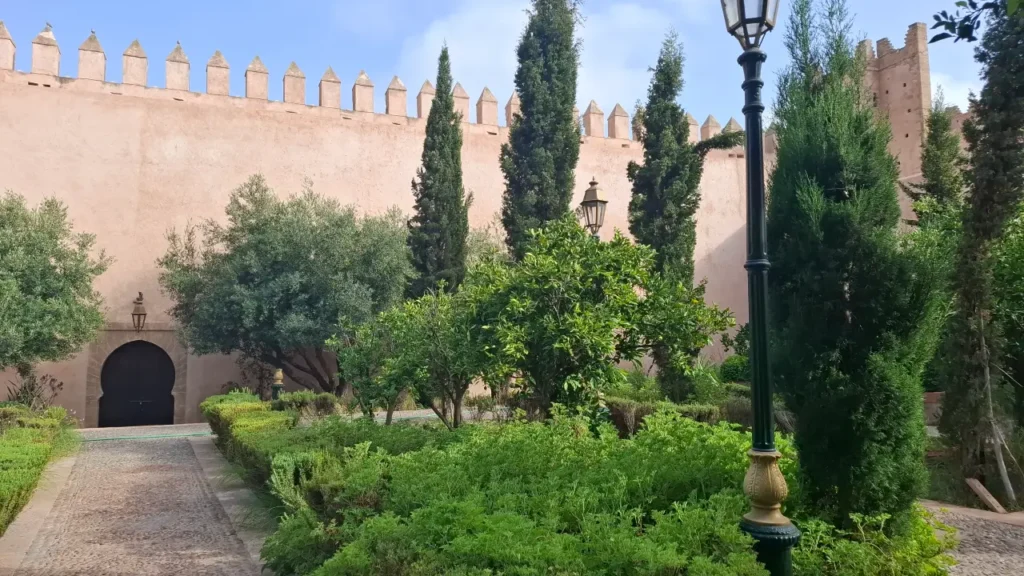
From the kasbah, make your way to the Café des Oudayas — known to older guidebooks as Café Maure — for a traditional mint tea with a direct view over the river toward Salé. It is one of the most reliable places in the city to simply sit, slow down, and watch Rabat’s coastal rhythm for a while.
Afterward, walk into the Rabat Medina through the historic Rue des Consuls. Compared with the medinas of Marrakech or Fes, Rabat’s medina is calmer and easier to navigate, with fewer crowds and a more local, less tourist-driven atmosphere.
Local note: Rabat’s medina rewards a slow, unplanned walk more than a checklist. You do not need a map for every street — getting slightly lost here is part of the experience, and it is hard to truly get lost in an area this compact.
Afternoon — Hassan Tower and the Mausoleum of Mohammed V
After lunch in or near the medina, head to Rabat’s most recognizable landmark: the unfinished 12th-century minaret known as Hassan Tower. Built starting in 1195 under the Almohad sultan Yacoub al-Mansour, the tower was meant to be part of the largest mosque in the western Islamic world. Construction stopped after the sultan’s death, leaving the 44-meter minaret unfinished — it still stands today, surrounded by the original mosque’s stone columns.
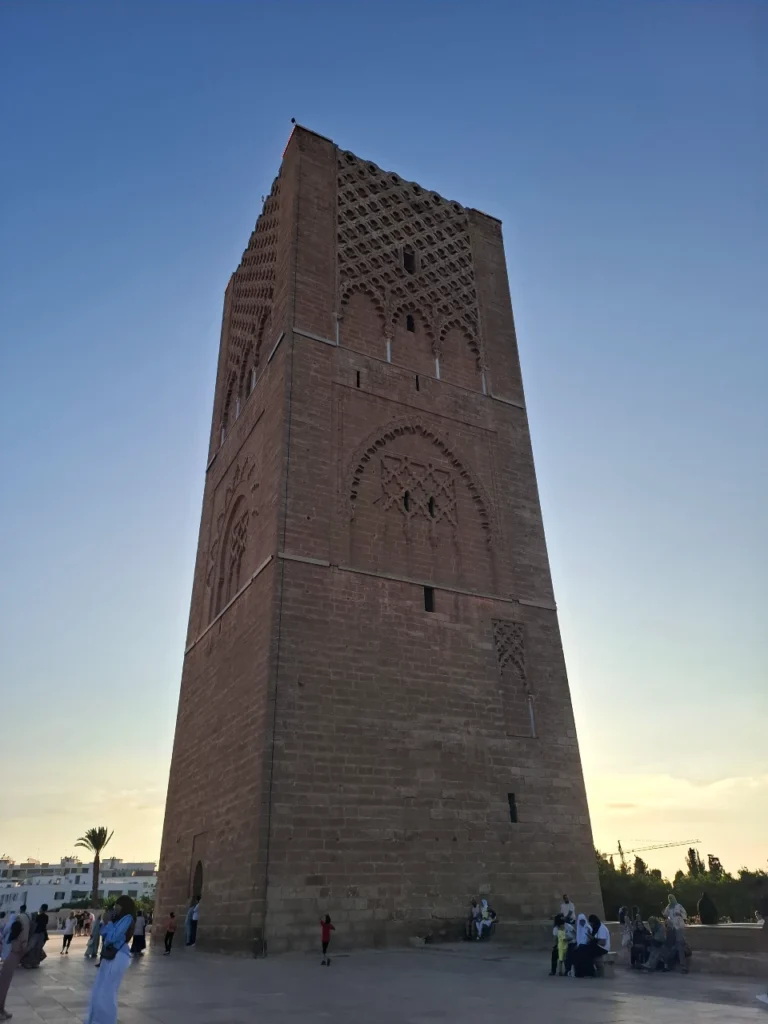
Directly across the esplanade is the Mausoleum of Mohammed V, the resting place of King Mohammed V and King Hassan II. Entry is free, and the mausoleum is open daily, typically from around 8:00am to 6:00pm. Inside, take time with the zellij tilework and the carved cedarwood ceiling — the craftsmanship is one of the clearest examples of traditional Moroccan architecture in the city.
Evening — Sunset Along the Atlantic
Close your first day with an easy walk along Rabat’s coastal edge, either toward Rabat Beach or along the stone breakwater near the kasbah. Watching the sun go down over the Atlantic from here is a genuine local ritual, not a staged photo stop — and it sets the tone for how the rest of your visit will feel.
Day 2: Culture, Art and the New Bouregreg Valley
Your second day moves from Rabat’s traditional cultural institutions toward the striking modern architecture rising along the Bouregreg riverfront — a useful reminder that Rabat’s identity is not only historical.
Morning — Mohammed VI Museum and the Botanical Garden
Begin at the Mohammed VI Museum of Modern and Contemporary Art, which opened in 2014 and houses a strong collection of Moroccan and international 20th and 21st-century art. The museum is typically open from 10:00am to 6:00pm and closed on Tuesdays — the museum’s official page lists current pricing and is the most reliable place to confirm hours before you go.
From the museum, it is a short walk to the Jardin d’Essais Botaniques, a quieter and less-visited green space than the Andalusian Garden. This is a good stop for travelers who want a genuine slow moment — shaded paths, older trees, and very few crowds.
Afternoon — Royal Theatre of Rabat and the Bouregreg Marina
Head down toward the riverfront to see the Royal Theatre of Rabat, designed by Zaha Hadid Architects and officially inaugurated in October 2024 before opening to the public in 2026. The building’s curved, wave-like exterior is one of the most striking pieces of contemporary architecture in Morocco, and it is worth seeing even from the outside if a performance or guided visit is not on your schedule.
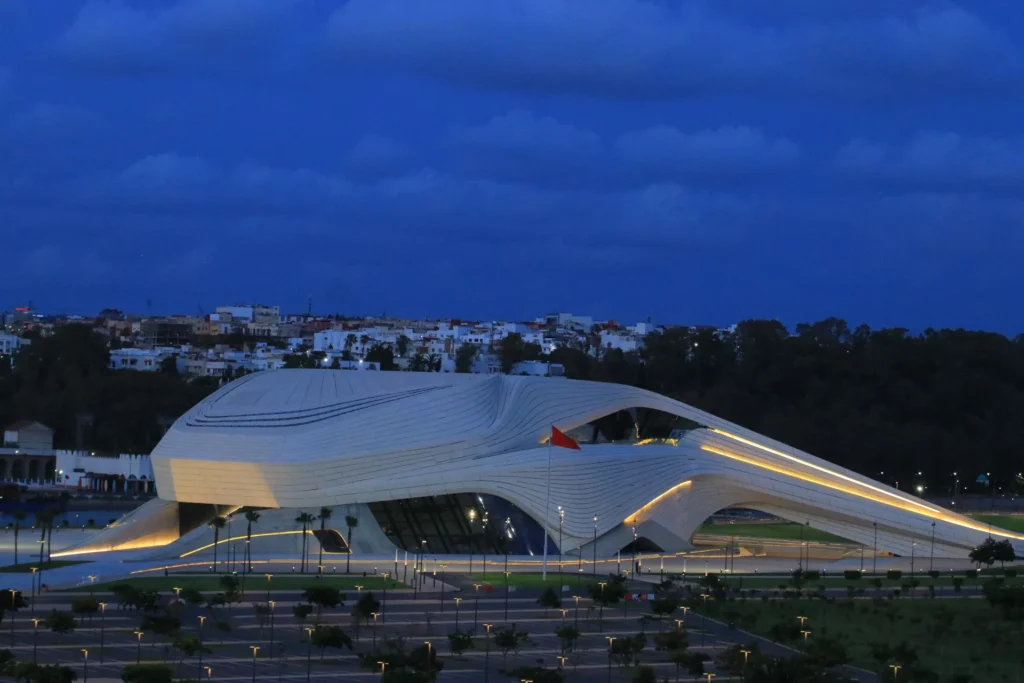
Local note: the Royal Theatre of Rabat is the correct media naming standard for this venue — you may also see it referred to as the Grand Theatre of Rabat or Théâtre Royal de Rabat.
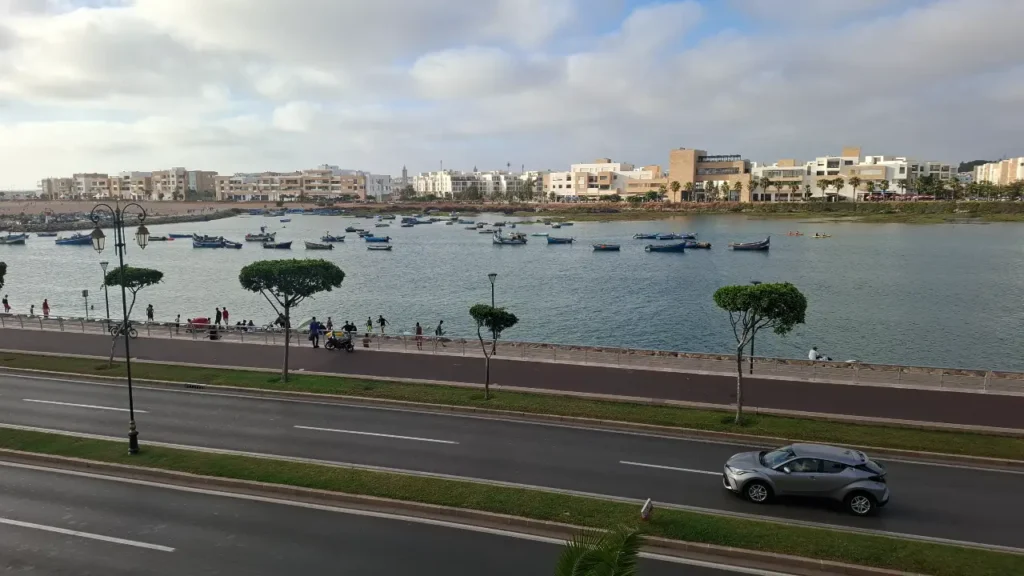
From there, continue along the corniche overlooking the Bouregreg Valley, where the river opens toward the Atlantic. This stretch offers a wide view across to Salé and its marina, with small traditional boats anchored along the water. It is also where you can arrange a short flouka crossing to Salé, a simple and inexpensive ride that has connected the two cities for generations, long before the bridges and tramway existed.
Evening — Riverside Dinner
Spend your evening near the marina or back in the Hassan district, where the kasbah and the modern skyline are both lit and visible from the water. This is a comfortable, walkable area to find dinner without needing a taxi afterward.
Day 3: Chellah, the New Skyline and Hay Riad
Your final day blends Rabat’s deepest history with its newest landmarks — a fitting way to close a visit that has shown you both sides of the city.
Morning — Chellah
Dedicate your morning to the walled Roman and Merinid ruins of Chellah, which combine the remains of the ancient city of Sala Colonia with a later necropolis. Entry costs approximately 70 MAD for foreign visitors, and current hours and ticket options are listed on Chellah’s official visitor site. The site is genuinely peaceful — overgrown gardens, old stone paths, and storks nesting on the ancient minarets give it a quieter, more reflective atmosphere than Rabat’s other major landmarks.
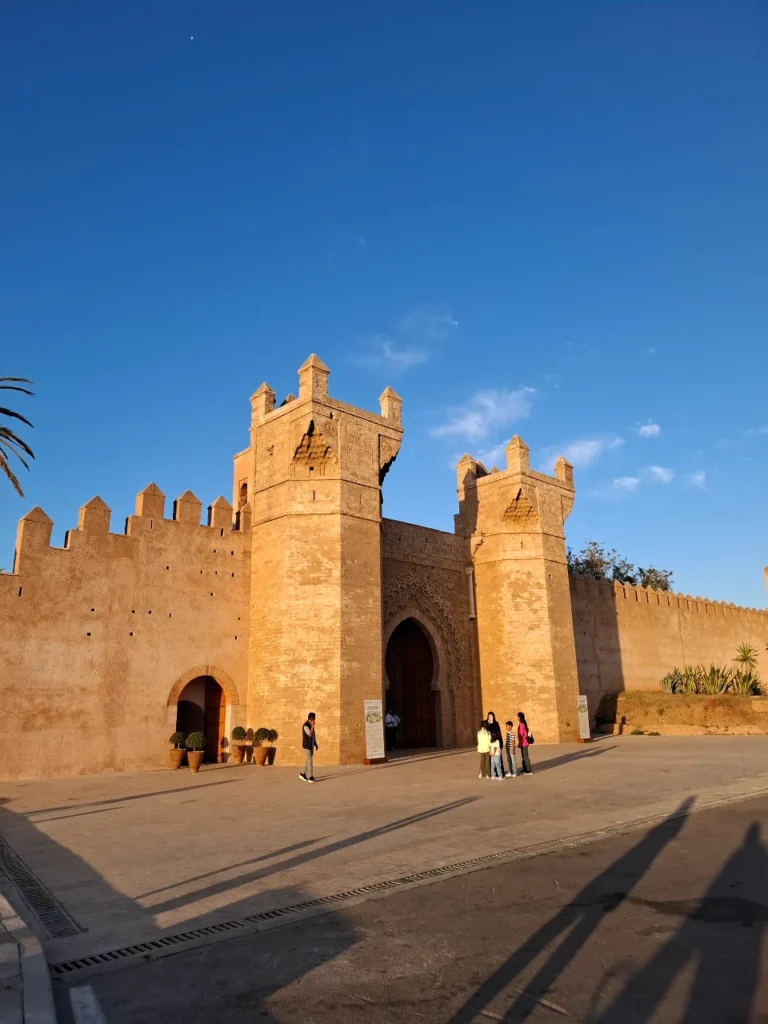
Local Tip from Oussama: I think Chellah is best visited slowly and without rushing toward the exit. Sit for a few minutes near the old minaret, let the storks and the quiet do their work, and you will understand why this is one of the places that shows Rabat’s calmer character most clearly.
Afternoon — Mohammed VI Tower and a Coffee Break
From Chellah, head toward the Mohammed VI Tower, which opened in 2026 as the tallest building in Africa at 250 meters. Its observatory offers a 360-degree view across the Bouregreg Valley, the twin cities of Rabat and Salé, and the Atlantic coastline. You can book your observatory tickets in advance through the tower’s official ticketing platform — booking ahead is strongly recommended, since access is timed.
At the base of the tower complex, the Waldorf Astoria hotel offers a refined setting for a coffee or afternoon tea after the observatory visit. A reservation is generally required to access the venue, so plan this stop ahead of time rather than arriving without one.
Evening — Mahaj Riad and Dinner in Hay Riad
As the afternoon fades, take a short taxi ride to Hay Riad, the modern business and residential district that shows a very different side of the capital than the medina you walked through on Day 1. Walk along Mahaj Riad, a tree-lined pedestrian avenue with cafés and shops where many Rabat residents spend their evenings — this is a useful place to see how locals actually live and relax, beyond the monuments.
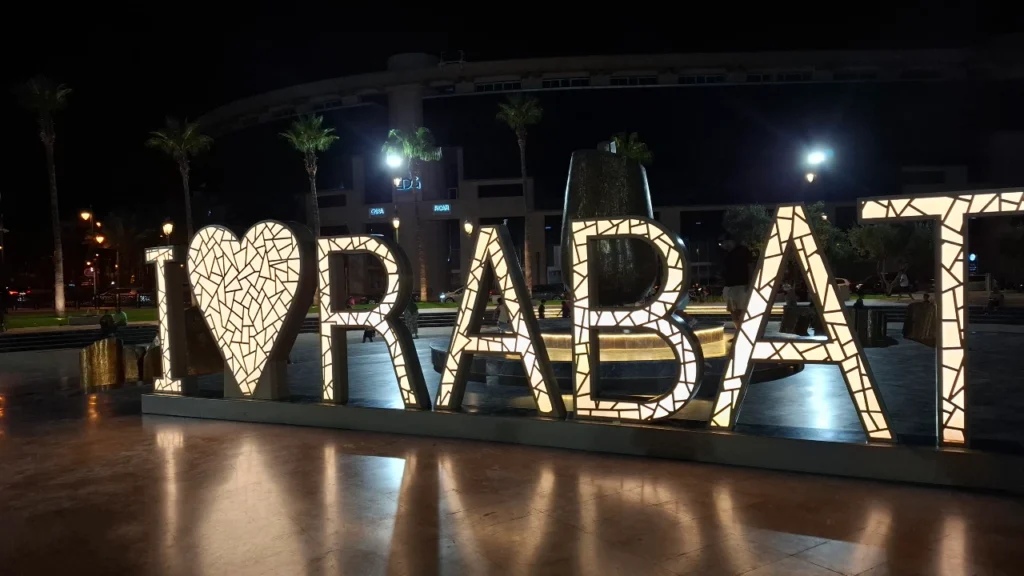
To close your three days, The View Hotel in Hay Riad offers several dining options with panoramic views over the district, including Cicchetti, an Italian small-plates restaurant, and the Buddha-Bar, known for its Asian-inspired menu and lounge atmosphere. Either is a comfortable way to end your visit overlooking Avenue Annakhil and the surrounding skyline.
Local Tip from Oussama
If I had to give one piece of advice for this itinerary, it would be this: do not try to merge Day 1 and Day 2 into a single long day. I understand the temptation when you only have three days, but Rabat’s real character comes through in the pauses — the tea at the Café des Oudayas, the slow walk through the Jardin d’Essais, the quiet minutes at Chellah. Rushing through them defeats the purpose of choosing Rabat in the first place.
Practical Compass
| Site | Suggested time | Entry fee (approx.) | Best time to visit |
|---|---|---|---|
| Kasbah of the Oudayas | 1–1.5 hours | Free | Morning |
| Rabat Medina | 1 hour | Free | Late morning |
| Hassan Tower & Mausoleum | 1–1.5 hours | Free | Afternoon |
| Mohammed VI Museum | 1.5 hours | 30–50 MAD (check official site) | Morning (closed Tuesdays) |
| Jardin d’Essais Botaniques | 30–45 minutes | Free | Morning |
| Royal Theatre of Rabat (exterior) | 30 minutes | Free to view | Afternoon |
| Bouregreg Marina + flouka crossing | 1–1.5 hours | A few MAD for the boat | Late afternoon / evening |
| Chellah | 1.5–2 hours | ~70 MAD | Morning |
| Mohammed VI Tower observatory | 1 hour | 250 MAD adult / 80 MAD child | Tue–Sun, 10am–9pm (closed Mon, book ahead) |
| Mahaj Riad, Hay Riad | 1–2 hours | Free to walk | Evening |
Getting around: Rabat’s tramway has operated since 2011 and covers two main lines connecting Rabat and Salé, with a single ticket costing around 6 MAD. Petit taxis are inexpensive and useful for longer hops, such as between the medina area and Hay Riad. Most of Day 1 and parts of Day 2 can be done entirely on foot. If you want the full picture on tram lines, taxi etiquette and which routes are actually walkable, we cover that in more detail separately.
Best For / Not Best For
| Best For | Not Best For |
|---|---|
| First-time visitors who want a clear, well-paced plan | Travelers who want to pack five or more sites into a single day |
| Couples and families looking for a calm, organized rhythm | Visitors looking mainly for nightlife or fast-paced energy |
| Culture travelers interested in history and architecture together | Travelers without flexible time for unplanned café stops |
| MREs and slower travelers who appreciate a mix of old and new Rabat | Budget travelers wanting to skip all paid attractions entirely |
Frequently Asked Questions
Yes. Three days comfortably covers the medina, the kasbah, Hassan Tower, Chellah, the city’s main museum, and at least one modern district like Hay Riad, without feeling rushed.
Yes. Most of the sites in this plan are walkable or reachable by tram or petit taxi, including the journey out to Hay Riad on Day 3.
It is strongly recommended. Tickets can be reserved through the tower’s official platform, ticketstower.ma, and access is generally timed.
Yes, with some flexibility. The pace is gentle, the gardens offer natural breaks, and most sites do not require long periods of standing in line. Families may want to shorten Day 2’s museum visit depending on their children’s interests.
Closing Thoughts
Three days gives Rabat enough room to show both sides of itself: the historic city around the kasbah and Hassan Tower, and the newer Rabat taking shape along the Bouregreg Valley and in Hay Riad. Follow this plan loosely rather than strictly — if a café or a garden makes you want to linger a little longer, that is usually a good sign you are visiting the city the way it is meant to be seen.
About The Author