

Is two days in Rabat enough time to experience Morocco’s coastal capital? Many travelers focus their Morocco itinerary on Marrakech or Fès, each with its own intensity and energy — but a thoughtful Rabat itinerary reveals a city that moves at its own elegant pace. This 48-hour guide is designed to show you the best things to do in Rabat without feeling overwhelmed.
Rather than demanding a packed schedule, Rabat rewards visitors who slow down. With its clean tramway, ocean air, and monumental heritage sites, you can cover the cultural highlights comfortably on foot. Whether you are a first-time visitor, a couple on a weekend getaway, or mapping out a broader journey, here is how two days in Rabat — a UNESCO World Heritage city since 2012 — can give you a clear sense of what makes Morocco’s capital different.
If you are still deciding whether the capital deserves a stop on your trip, our guide to whether Rabat is worth visiting may help you decide first.
The Quick Answer
Two days in Rabat gives you enough time to visit the main historical landmarks, explore the Medina, walk along the Bouregreg River, and experience the city’s quieter and more cultural atmosphere. Day one covers the historical heart of the city — Hassan Tower, the Kasbah of the Oudayas, and the Andalusian Gardens. Day two covers Chellah, the Medina, the Mohammed VI Museum of Modern and Contemporary Art, and the Grand Theatre of Rabat. The distances are short, the city is walkable, and two days feels comfortable rather than rushed.
Key Takeaways
- Two days is a practical and comfortable amount of time for Rabat’s main highlights.
- Day 1 focuses on the historical north of the city — Hassan Tower, Kasbah, Andalusian Gardens.
- Day 2 covers the southern and cultural side — Chellah, Medina, museums, Grand Theatre.
- Rabat is walkable for most of Day 1. The tramway handles the rest.
- In 2026, Rabat holds the title of UNESCO World Book Capital, making it a particularly strong year to visit for cultural travelers.
What to Expect from Two Days in Rabat
Two days in Rabat works best when you accept the city’s pace rather than fight it. This is not a city where you will sprint between twenty stops and tick off a checklist. Rabat rewards visitors who slow down, take time at each place, and leave space for a coffee break or a quiet walk along the river.
In two days, you can comfortably visit five to seven places without feeling rushed. You will not see everything — the Royal Palace exterior, the Jardin d’Essais Botaniques, and some of the newer neighborhoods like Hay Riad deserve more time — but you will leave with a real understanding of the city’s identity.
Rabat was designated a UNESCO World Heritage Site in 2012, recognized for combining living heritage and modern culture. That recognition reflects something you will feel as a visitor: the city manages to be historical and organized at the same time.
| Day 1 | Day 2 | |
|---|---|---|
| Morning | Hassan Tower + Mausoleum Mohammed V | Chellah |
| Late Morning | Kasbah of the Oudayas | Rabat Medina |
| Afternoon | Andalusian Gardens + Bouregreg walk | Mohammed VI Museum |
| Late Afternoon | Rest or café | Grand Theatre of Rabat (exterior) |
| Evening | Dinner near Hassan or Medina area | Dinner on Avenue Mohammed V or Agdal |
Day 1: The Historical Heart of Rabat
Day one stays in the northern part of the city, where Rabat’s most iconic monuments stand close to each other. Most of this day can be done on foot, which makes it particularly pleasant.
Morning — Hassan Tower and Mausoleum Mohammed V
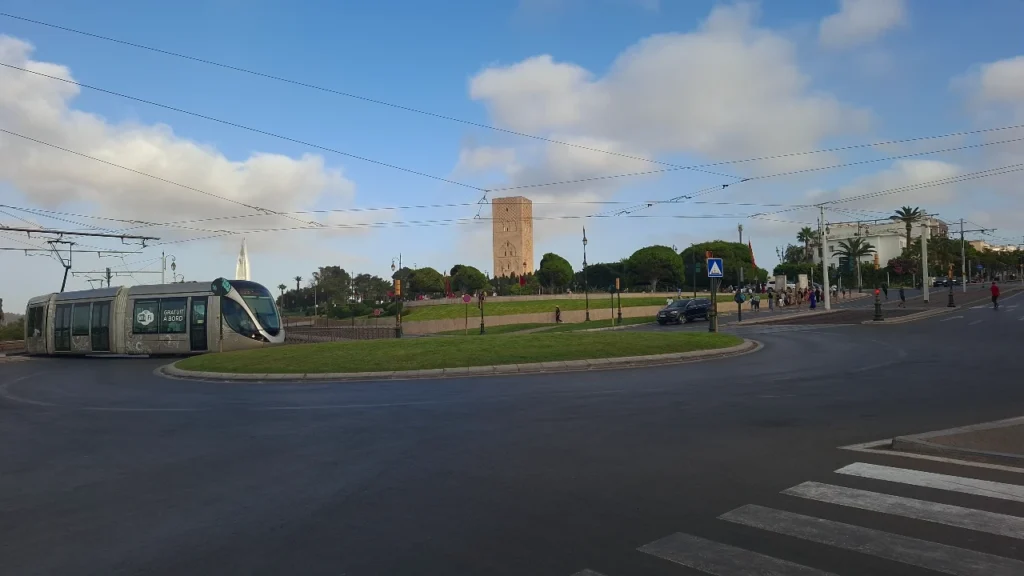
Start your first morning at Hassan Tower. Built in 1195 under the Almohad sultan Yacoub al-Mansour, the minaret stands 44 meters tall and was intended to be the largest mosque in the world before construction stopped. What remains today — the tower, the rows of stone columns, and the open esplanade — is one of Rabat’s most striking landmarks.
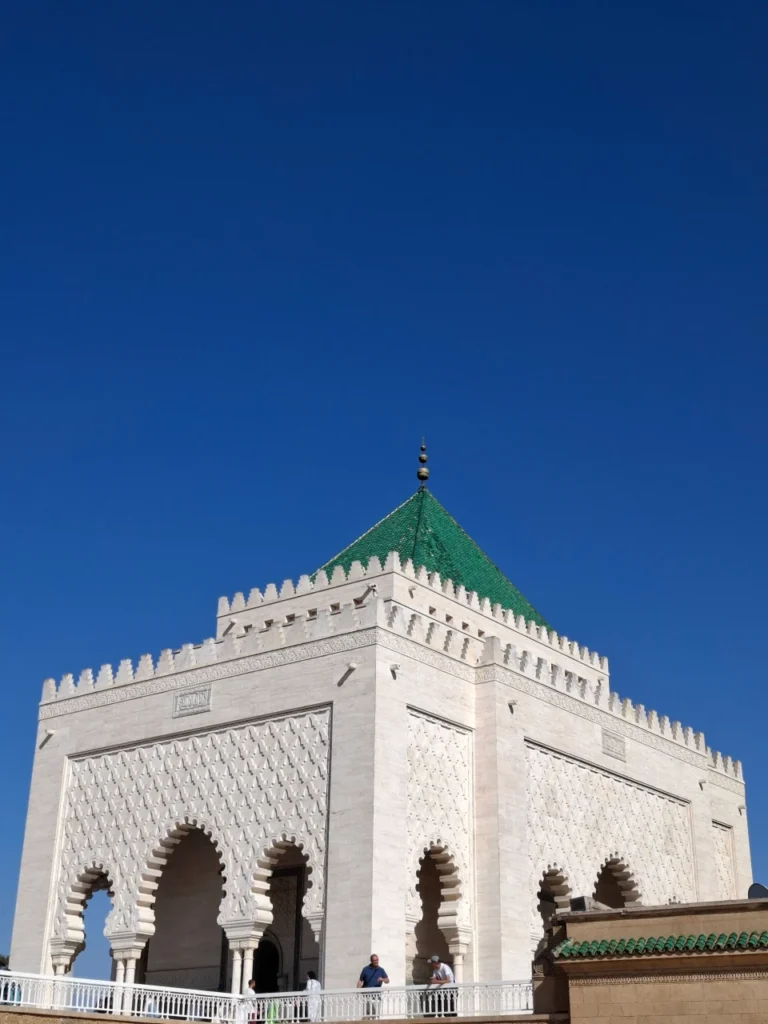
The Mausoleum of Mohammed V stands directly across from the tower. It is the resting place of King Mohammed V and his two sons, King Hassan II and Prince Abdallah. The architecture is detailed, the interior is carefully maintained, and the site carries a quiet formality that feels appropriate for the place. Entry is free.
Arrive before 10 AM if possible. The morning light on the tower is clear, the esplanade is calm, and you will avoid the midday heat in summer. Plan around 45 minutes to an hour for the full visit.
The Hassan Tower area is served by the Rabat tramway, which has been operating since 2011. The Hassan tram stop is a short walk from both monuments.
Late Morning — Kasbah of the Oudayas
From Hassan Tower, walk north along the river toward the Kasbah of the Oudayas. The distance is about ten minutes on foot and the walk itself is pleasant, with views across the Bouregreg toward Salé.
The Kasbah is a 12th-century fortress built on a rocky promontory overlooking both the Atlantic Ocean and the river mouth. It is part of the UNESCO World Heritage ensemble inscribed in 2012. Walk through the main gate — Bab Oudaia — and follow the narrow blue-and-white streets into the interior. The Kasbah is small enough to explore without a map and calm enough to stop and look properly.
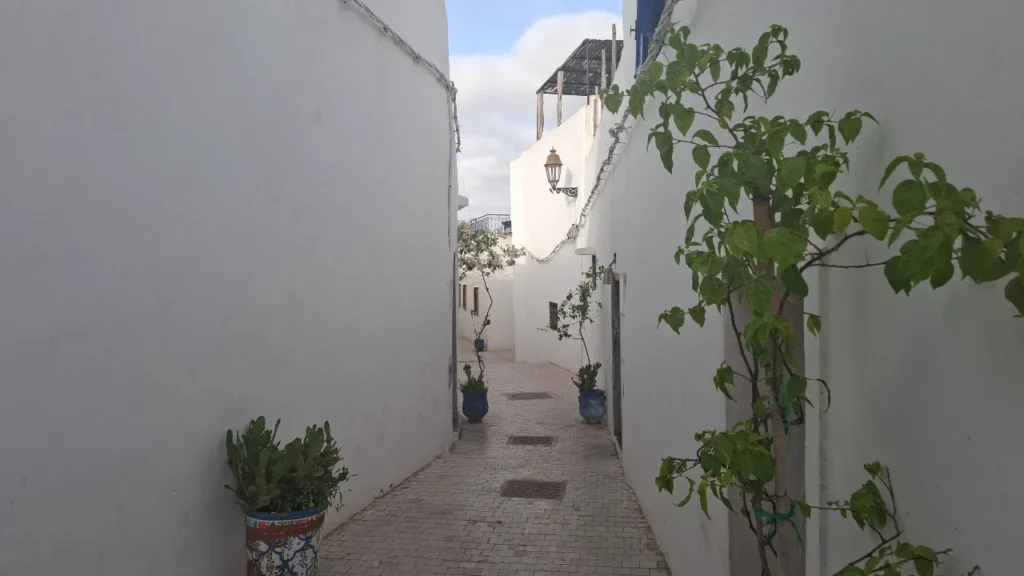
The viewpoint at the far end of the Kasbah is one of the best spots in Rabat. On a clear day you can see the Atlantic, the beach of Rabat, and the town of Salé across the water.
Plan around 45 minutes to an hour here, or longer if you walk slowly.
Afternoon — Andalusian Gardens and the Bouregreg Walk
Just below the Kasbah walls, the Andalusian Gardens offer one of the calmer moments of any visit to Rabat. The garden is well kept, shaded by orange trees, and genuinely pleasant in a city that is already pleasant. It is a good place to pause between monuments rather than rush to the next one.
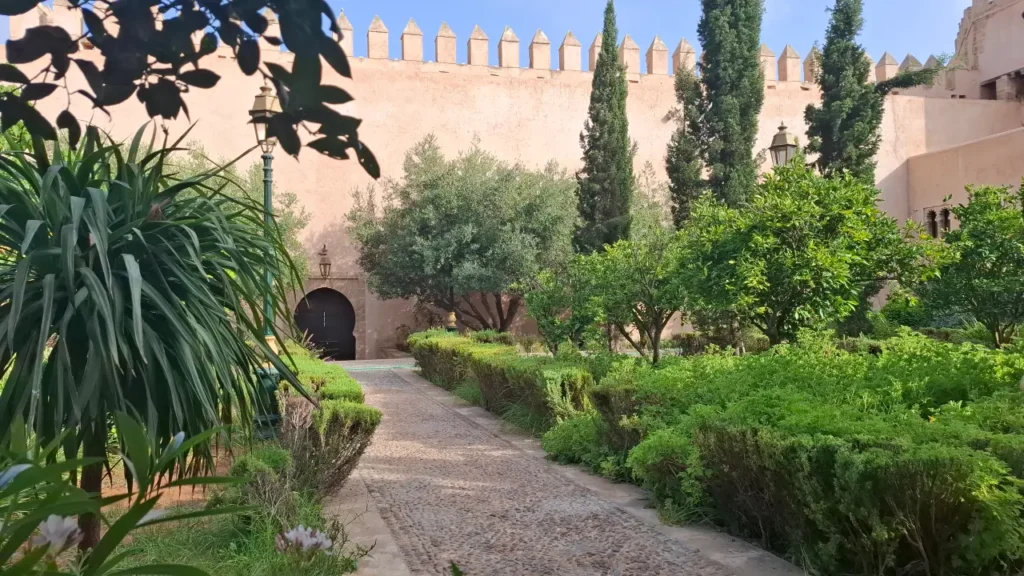
After the gardens, walk down toward the Bouregreg River and follow the promenade south. The walk along the water, with views across to Salé, is relaxed and scenic. This is where Rabat’s coastal identity is easiest to feel — open air, water, and a slower rhythm.
Café Maure, located within the Kasbah walls near the garden, is a reliable option for mint tea with a view. I think it is one of the nicest places in Rabat to sit for twenty minutes and do nothing in particular.
For a broader overview of everything the city offers, our guide to the best things to do in Rabat covers the full range of options beyond this itinerary.
Evening — Dinner Near the Hassan District or Medina
The Hassan district and the area around the Medina entrance offer several comfortable options for dinner. The streets are calm in the evening, the restaurants are varied, and you will not feel rushed. End the evening early if you want to start Day 2 fresh — Chellah is best visited in the morning.
Day 2: Culture, Medina and Modern Rabat
Day two moves toward Rabat’s cultural and contemporary identity, while still keeping the historical depth that defines the city. It is a slightly more varied day, mixing ancient ruins, a calm medina, a strong museum, and one of Africa’s most significant new cultural buildings.
Morning — Chellah
Start your second day at Chellah, located in the southern part of the city. Chellah is one of Rabat’s most layered sites: it began as the Roman city of Sala Colonia, founded in the 2nd century AD, and was later repurposed in the 14th century by the Merinid dynasty, who built a fortified Islamic necropolis on top of the Roman ruins. The result is a site where you can walk through Roman roads, Merinid tombs, and lush gardens all in the same visit.
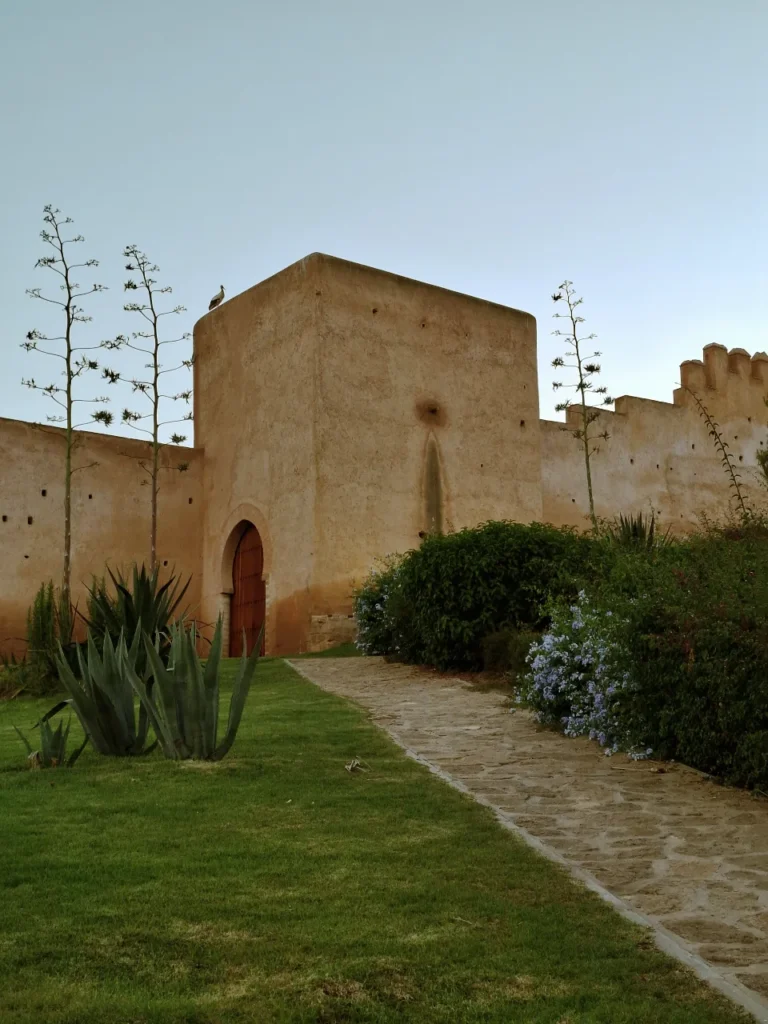
Entry is approximately 70 MAD for foreign visitors. Allow one hour to one and a half hours — the space is generous and there is more to see than many visitors expect. The resident storks nesting on the ruins are a distinctive detail that Chellah is quietly known for among regular Rabat visitors.
The petit taxi from the city center to Chellah is the most direct option. The ride takes about ten minutes.
Late Morning — Rabat Medina
From Chellah, make your way back toward the Medina. Rabat’s Medina was built in the 17th century by Andalusian refugees who arrived from Spain following the fall of Islamic Andalusia. It is one of the younger medinas in Morocco, which partly explains why it feels calmer and more navigable than Fès or Marrakech.
The Medina is organized on a readable grid rather than a labyrinth. Rue des Consuls is the most interesting street for craft shopping — leather goods, lanterns, carpets and local artisanat at a pace that does not feel overwhelming. The atmosphere is genuinely local, not staged for tourism.
Plan around 45 minutes to an hour of walking through the Medina. If you enjoy this kind of exploration, it can easily extend to two hours.
Afternoon — Mohammed VI Museum of Modern and Contemporary Art
The Musée Mohammed VI d’Art Moderne et Contemporain is the most significant modern cultural institution in Rabat. The building itself — a neo-Moorish structure on Mohammed V Avenue — is worth seeing from the outside, and the collections inside focus on Moroccan and international modern and contemporary art.
This is a good choice for the second afternoon because it offers a different kind of experience from the morning’s historical sites. The museum is air-conditioned, calm, and spacious. Plan around one hour to one and a half hours. Check the current exhibition before visiting, as the programme rotates.
Late Afternoon — Royal Theatre of Rabat
A short walk from the museum along the Bouregreg Valley brings you to the Royal Theatre of Rabat, one of the most architecturally significant new buildings in Africa. Designed by Zaha Hadid and her firm, with its undulating form inspired by the Bouregreg River, the masterpiece officially opened its doors in April 2026, inaugurated during a historic gala evening attended by Royal Princesses Lalla Khadija, Lalla Meryem, and Lalla Hasnaa. The theatre includes a main auditorium with 1,800 seats and an outdoor amphitheatre designed to welcome up to 7,000 visitors for cultural events. It forms part of the broader Bouregreg Valley Development Project initiated in 2006.
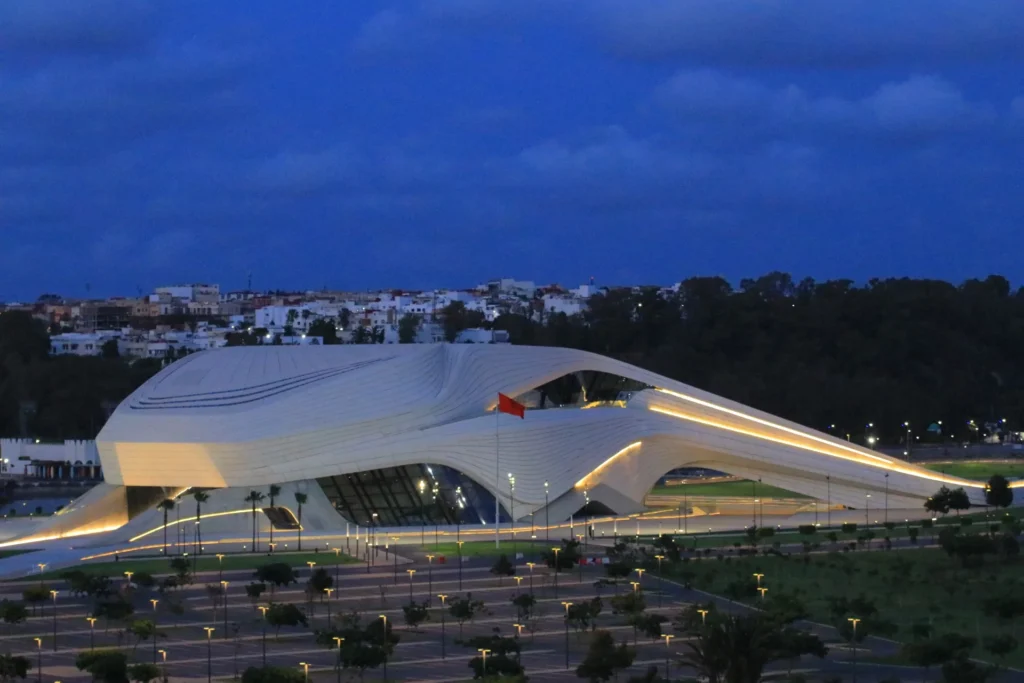
The Royal Theatre of Rabat sits in a wider context worth noting for cultural travelers: in 2026, Rabat holds the title of UNESCO World Book Capital, a recognition of the city’s literary ecosystem, its publishing houses, book fairs, and commitment to cultural access. This is a particularly good year to visit if you are drawn to cities with a strong cultural identity.
The theatre’s exterior and riverbank setting are worth at least thirty minutes, and the views across the Bouregreg from this area are among the best in the city. Keep in mind that while the interior is generally reserved for ticket holders and scheduled events, admiring Zaha Hadid’s futuristic curves from the outside is an experience in itself. If a performance or cultural event is scheduled during your visit, booking ahead for an evening programme is highly recommended to experience the venue at its best.
Evening — Avenue Mohammed V or Agdal
End your two days in Rabat calmly. Avenue Mohammed V is the city’s main boulevard, lined with palm trees, cafés, and a more relaxed evening atmosphere than you would find in most Moroccan cities. The Agdal neighborhood, a short tram ride away, offers modern restaurants and a quieter, more residential feel.
Local Tip from Oussama
My advice for two days in Rabat is to resist the urge to fill every hour. The city’s value does not come from covering more ground — it comes from staying long enough at each place to understand it. I would particularly suggest not combining Chellah and Hassan Tower on the same day. They are both historically rich and both deserve real attention. Splitting them across two mornings, as this itinerary does, means you arrive at each place with fresh energy rather than a tired checklist mentality. Rabat is a city that gives more the slower you move through it.
Practical Compass
Where to Stay
For a two-day stay, location matters more than almost anything else. You want to be close to what you are visiting, not spending your limited time in transit.
Our recommendation is Stay Here — an elegant Moroccan hospitality startup offering upscale apart-hotels that combine the comfort and service of a hotel with the space and flexibility of a private apartment. Stay Here has properties in Hassan, Agdal, and Hay Riad, which places you within easy reach of every landmark in this itinerary. It is one of the most practical and refined choices currently available in Rabat for this kind of short cultural stay.
For a broader look at neighborhoods and accommodation styles, our guide on where to stay in Rabat covers each area by traveler type.
Getting Around
The good news first: Rabat is one of the most walkable capital cities in Morocco, and Day 1 of this itinerary requires almost no transport at all. Hassan Tower, the Kasbah of the Oudayas, the Andalusian Gardens, and the Bouregreg promenade form a natural walking circuit in the northern part of the city.
For the rest of your movements, here is how the city works:
Inside the city — Tramway and Petit Taxis
The Rabat-Salé tramway, operational since 2011, runs two clean and reliable lines across the main districts — Hassan, Agdal, city center, and beyond. It is inexpensive, easy to use, and the right choice for moving between neighborhoods without stress.
For shorter or more direct rides — to Chellah, the museum area, or the Medina — the iconic blue petit taxis are your best option. They operate strictly on a metered fare (the compteur), which makes them reliable and honest for visitors. Always confirm the meter is running when you board.
Arriving from the airport
One important point: the tramway does not reach Rabat-Salé Airport. For your arrival, you have three practical options.
- A white Grand Taxi from the official stand outside the arrivals terminal. Rates are posted in the hall — confirm the fare before departure.
- An Alsa airport shuttle bus, which operates a direct route between Rabat-Salé Airport and the city center. Check current schedules locally on arrival.
- A VTC or private transfer pre-booked via a trusted platform such as Booking.com, with the fare confirmed before pickup.
Arriving from Casablanca, Tangier, or other Moroccan cities
Rabat is well connected by rail. The ONCF national train network runs frequent services from Casablanca Casa-Voyageurs to Rabat Ville in approximately one hour. If you want the high-speed experience, the Al Boraq connects Casablanca Casa-Voyageurs to Rabat Agdal in 51 minutes. From Tangier Ville, Al Boraq reaches Rabat Agdal in 1 hour 22 minutes — a comfortable and scenic ride along the Atlantic coast. From Kenitra, a standard train reaches Rabat Agdal in around 40 minutes. You can check current schedules and book your tickets through ONCF Voyages.
You do not need a rental car for this two-day Rabat itinerary. A car only becomes useful if you plan to continue beyond Rabat or make day trips to nearby regions such as Chefchaouen, Meknes, or the Atlantic coast.
Entry Fees
Most of Rabat’s landmarks are free or very affordable, which makes the city genuinely accessible without planning a complicated budget.
Hassan Tower and Mausoleum Mohammed V — Free entry. Open daily.
Kasbah of the Oudayas — Free to enter and walk through. The small museum inside the Kasbah carries a modest fee.
Chellah — Ticketed entry with official tiered pricing for international visitors. You can find current details and visitor information on the official Chellah website.
- Adults (25 years and over): 70 MAD
- Youth and students (15 to 25 years): 50 MAD
- Children (7 to 14 years): 30 MAD
Mohammed VI Museum of Modern and Contemporary Art — Official entry rates:
- Standard ticket: 30 MAD
- Reduced rate: 15 MAD
- Day pass: 50 MAD
- Free for children under 6 years old
Royal Theatre of Rabat — Access to the theatre grounds and interior is generally restricted to ticket holders or specific cultural events. Performance and entry tickets vary depending on the programme — check official listings ahead of your visit.
Best For / Not Best For
Two days in Rabat is the right choice for some travelers and not others. Here is an honest read of who this itinerary suits best.
This itinerary is a strong fit for:
- First-time visitors to Morocco who want a calm, organized, and culturally rich introduction
- Cultural travelers drawn to UNESCO heritage sites, Islamic architecture, and modern Moroccan art
- Couples looking for an elegant and unhurried weekend away
- Families with older children who can manage a walking-heavy first day
- Solo female travelers who prefer a structured, manageable city with clear landmarks
- MREs rediscovering a Rabat that has grown more refined, more cultural, and more confident
This itinerary is probably not the right fit if:
- Your main priority is nightlife or a lively late-evening scene
- You want the intensity and sensory depth of Marrakech’s souks and Jemaa el-Fnaa
- You are looking for a beach resort experience as your primary activity
- You are trying to cover multiple Moroccan cities in the same two days
- You prefer very dense, fast-paced itineraries with ten or more stops per day
Frequently Asked Questions
Two days is enough to visit Rabat’s main landmarks comfortably and get a genuine sense of the city. You will not see everything, but you will leave with a clear understanding of Rabat’s historical, cultural, and coastal character. For a more relaxed pace or deeper exploration, three days works well.
Hassan Tower, the Mausoleum of Mohammed V, the Kasbah of the Oudayas, Chellah, and the Rabat Medina are the core historical landmarks. The Mohammed VI Museum and the Royal Theatre of Rabat add strong cultural weight to a second day.
Rabat and Casablanca have different identities. Casablanca is Morocco’s largest city, driven by business scale and urban energy. Rabat is calmer, greener, more coastal, and better suited to a cultural itinerary. If your priority is historical landmarks, gardens, a UNESCO heritage area, and a more organized pace, Rabat fits that intention more naturally than Casablanca.
Rabat is one of Morocco’s most practical cities without a car. Day 1 of this itinerary is almost entirely walkable. The tramway covers the main districts efficiently, petit taxis are inexpensive and easy to find, and the train connects Rabat directly to Casablanca and other cities via ONCF.
Rabat can feel calmer and more organized than many other Moroccan cities, which makes it a more comfortable experience for solo female travelers. The main tourist areas, tramway, and daytime streets are generally easy to navigate. Normal city awareness applies, particularly in the evenings and in quieter streets. Choosing a well-located hotel in the Hassan or Agdal area helps keep movement simple and comfortable.
About The Author
