

If you are planning a Morocco trip and trying to decide how much time to give Rabat, this guide gives you a clear and honest answer — based on what the city actually offers and what you can realistically see and do in one, two, or three days.
Quick Answer
Two days is the recommended stay in Rabat, Morocco for most visitors. It gives you enough time to visit the main historical landmarks, explore the medina, walk along the Bouregreg waterfront, and get a real feel for the city’s calm and elegant rhythm. Three days allows a more relaxed pace — with time for the Mohammed VI Tower observation deck, the botanical garden, a half-day in Salé, and the kind of slow discovery that makes Rabat genuinely enjoyable. One day is possible but limited. You will see the highlights, but you will miss much of what makes Rabat worth the stop.
Key Takeaways
- Two days is the ideal stay for most first-time visitors to Rabat, Morocco
- Three days gives a more complete and relaxed experience, especially for families
- One day covers the main landmarks only — but Rabat offers significantly more
- The Mohammed VI Tower, Rabat Zoo, Jardin Botanique, and the new Bouregreg waterfront park are worth the extra time
- Rabat is easy to reach by Al Boraq from Tanger and by train from Casablanca
- A half-day in Salé is worth adding if you have three days
Is One Day Enough in Rabat, Morocco?
One day in Rabat is possible, but it is not enough to see everything the city genuinely offers.
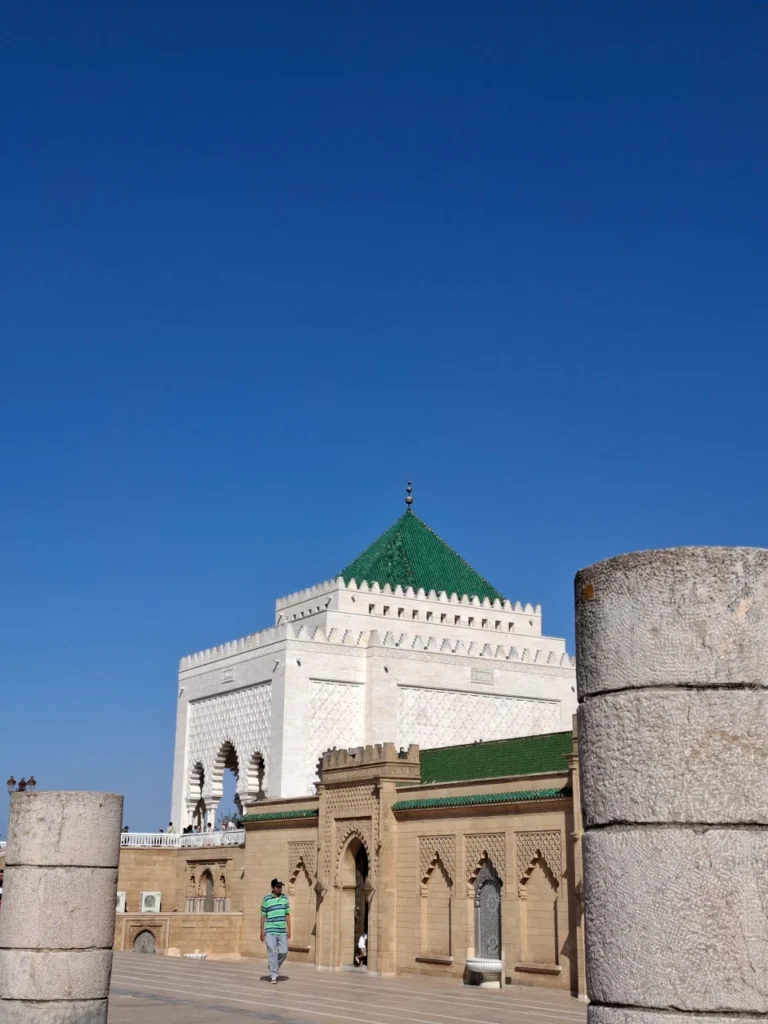
In a single day, you can visit Hassan Tower, the Mausoleum of Mohammed V, the Kasbah of the Oudayas, and the Andalusian Garden. That covers the most iconic landmarks and gives you a solid introduction to Rabat’s historical identity.
But one day means you will miss Chellah, the Rabat Medina at a relaxed pace, the Mohammed VI Tower observation deck, the Jardin Botanique, the Bouregreg waterfront, the museums, and the modern neighborhoods that show a very different side of the city.
If one day is all you have, it is still worth the stop. The main sites are close together and easy to navigate. But if you can extend your stay to two days, the experience becomes significantly more complete — and more memorable.
For a full one-day plan, see our One Day in Rabat: Practical Itinerary.
Two Days in Rabat — The Recommended Stay
Two days is the sweet spot for most visitors to Rabat, Morocco.
It gives you enough time to cover the main historical sites without rushing, explore the medina calmly, walk along the Bouregreg waterfront, visit Chellah, and still have time for a café stop or a stroll through the city’s elegant neighborhoods.
Day 1 — Historical Rabat
Start at Hassan Tower and the Mausoleum of Mohammed V in the morning. The open esplanade is one of the most atmospheric spaces in Rabat, and it is best enjoyed before the midday heat.
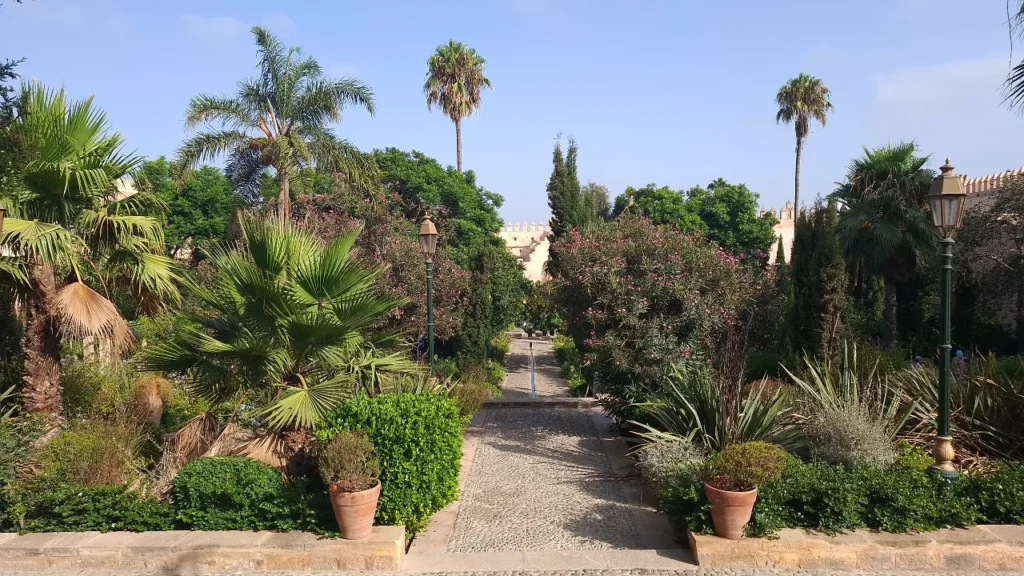
From there, walk or take the tram to the Kasbah of the Oudayas. Move slowly through the blue and white streets, stop at the Andalusian Garden, and look out over the Atlantic from the ramparts. This area is one of the most pleasant in Rabat for a slow, calm walk.
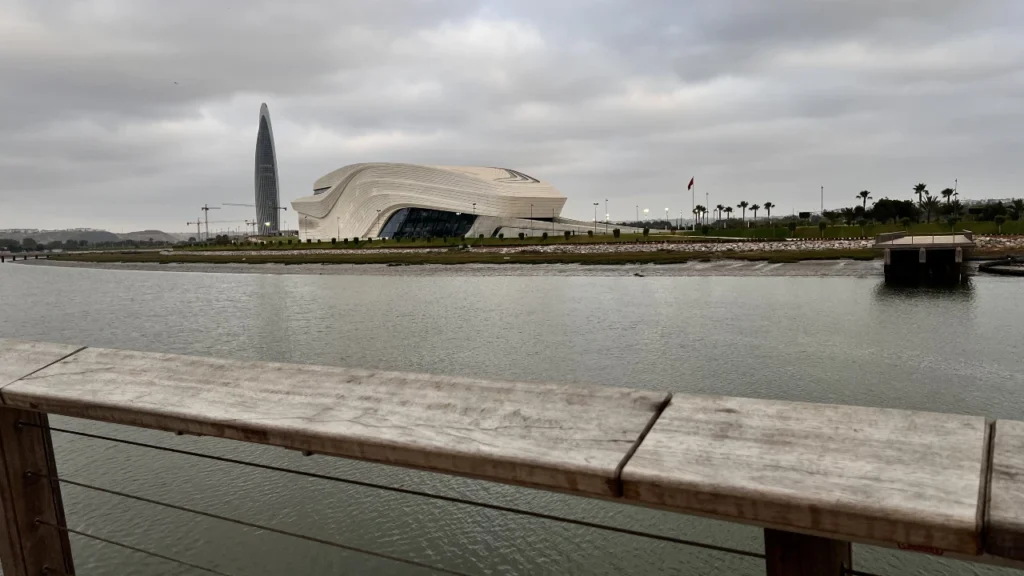
In the afternoon, explore the Bouregreg waterfront toward the marina. The open riverside space gives a clear view of Salé across the water and is one of the best places in the city to feel Rabat’s coastline identity.
Day 2 — Deeper Rabat
On the second day, move beyond the most visited landmarks.
Start with Chellah in the morning — the ancient Roman and medieval Islamic ruins on the southern edge of the city are rarely crowded and genuinely atmospheric. Allow at least an hour.
In the afternoon, visit the Rabat Medina at a relaxed pace, then explore the Mohammed VI Tower area near the Bouregreg. If you want a broader perspective of the city, the observation deck at the top of the tower is worth including — details in the section below.
End the day with a walk through Agdal or a coffee stop at Le Carrousel on the corniche for a view of the Atlantic.
For a full plan, see our Two Days in Rabat: Calm Cultural Itinerary.
Three Days in Rabat — A Relaxed and Complete Experience
Three days allows you to see everything comfortably and still have space to slow down. This is the recommended stay for families, culture travelers, and anyone who wants to understand Rabat beyond its most photographed spots.
With three days, you can add:
Mohammed VI Tower — Observation Deck
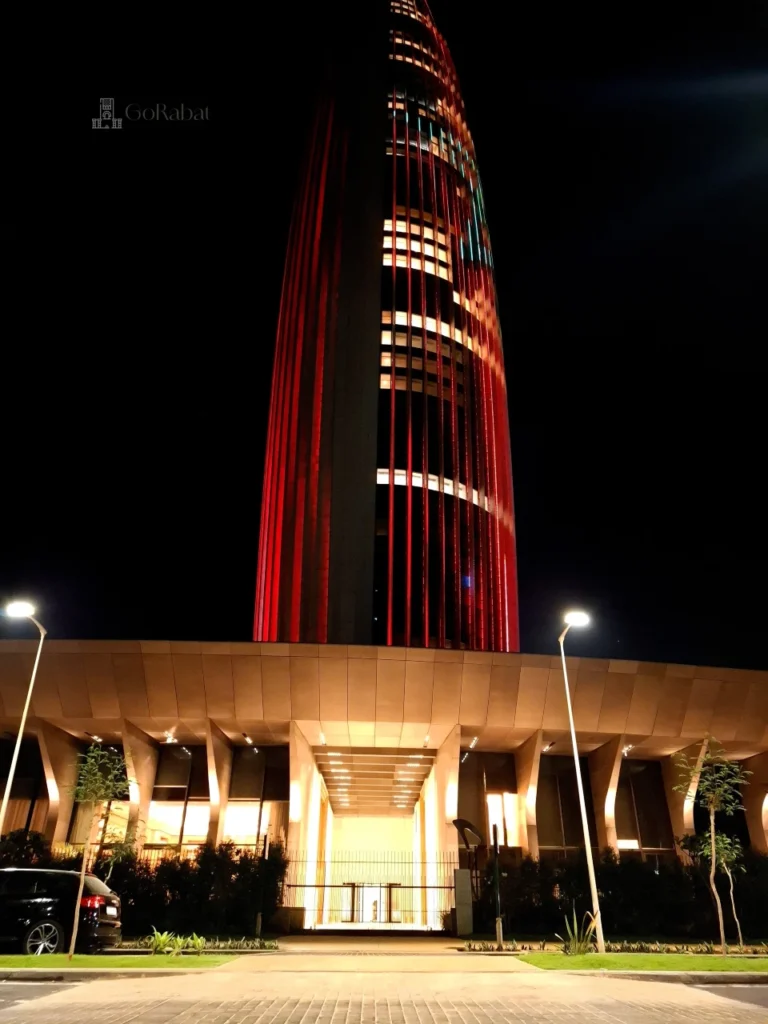
The Mohammed VI Tower (Tour Mohammed VI) is located in the Bouregreg Valley between Rabat and Salé. It is one of the tallest towers in Africa and has become a new symbol of modern Rabat.
The observation deck spans the 50th and 51st floors:
- 50th floor — the Observatoire du Patrimoine, with interactive displays on Moroccan heritage
- 51st floor — a permanent exhibition on Arab-Andalusian astronomy, under a large glass cockpit with panoramic views of Rabat, Salé, the Bouregreg River, and the Atlantic Ocean
Practical details:
- Tickets must be booked exclusively through the official website: ticketstower.ma. No walk-in entry is available — online reservation is mandatory before your visit.
- Tickets: 250 DH for adults / 80 DH for children
- Access from Rabat city center: 10–15 minutes by taxi or car via the Pont Hassan II or Pont Moulay Youssef. Underground parking is available on site. By tramway: take line 1 or 2 to Pont Hassan II station, then a short taxi ride.
Jardin Botanique (Jardins d’Essais Botaniques)
Located at the junction between the city center and the Agdal neighborhood, the Jardins d’Essais Botaniques is one of Rabat’s most peaceful green spaces and part of the UNESCO World Heritage ensemble. It is easy to reach by tramway — the Jardin d’Essais station stops directly at the entrance.
- Access is free and open to all
- Open every day except Monday
- Hours: approximately 8h00 to 20h00
- 17 hectares of shaded paths, trees, cactus gardens, small basins, and local birdlife
It is a calm, instructive space that works well for families. There are no play structures, but children enjoy the open space, the large trees, and the variety of plants. It is also a good spot for a quiet morning walk before visiting other sites.
Rabat Zoo — For Families
The Jardin Zoologique National de Rabat is one of the best family attractions in the city — and one of the most underrated in Morocco.
Opened in its current form in 2012, it covers over 50 hectares and is organized around five distinct ecosystems: Savanna, Desert, Atlas Mountains, Tropical Forest, and Wetlands. The enclosures are large, well landscaped, and modern. The park is clean, tree-lined, and easy to navigate with pushchairs.
Animal highlights:
- Lions de l’Atlas — Rabat holds the largest captive population of Atlas Lions in the world, a subspecies now extinct in the wild. The rocky elevated enclosures are impressive.
- Savanna mammals — giraffes, elephants, white rhinoceroses, and hippos with an underwater viewing area
- Vivarium — indoor reptile space with pythons, cobras, and crocodiles
- Pédagogique farm — a hands-on area where children can feed and touch farm animals
Practical details:
- Location: south-west outskirts of Rabat, approximately 15–20 minutes by car from the city center
- Getting there: grand taxi or, more conveniently, a VTC app such as Heetch — strongly recommended for a comfortable and straightforward ride from the city center without needing to negotiate fares
- Hours: 10h00 to 18h30 (spring/summer), closes earlier in winter
- Tickets: 70 DH adults / 50 DH children (3–12 years)
- Family pack: approximately 170 DH for 2 adults + 2 children
- ONCF train discount: if you arrive in Rabat by Al Boraq or Atlas train, showing your ticket at the zoo entrance gives a significant reduction — 50 DH adult / 30 DH child
Marché Dar Essalam, Malls and Cinema
Rabat also has a growing modern leisure scene that most travel guides overlook.
Marché Dar Essalam — Located in the Souissi neighborhood, this is a modern open-air lifestyle concept space with restaurants, cafés, fine food shops, fashion boutiques, and cultural spaces. It is calm, well designed, and popular with local families and residents. The Cinéma Pathé Dar Essalam is located within the same complex — 8 screens with modern projection and comfortable seating. A good option for a relaxed evening.
Arribat Center — In the heart of Agdal, this is currently Rabat’s largest shopping mall. It includes international brands (Zara, H&M, Mango), a Carrefour supermarket, a food court, and the Megarama cinema.
Le Carrousel — A newer open-air mall on the Rabat corniche, with boutiques, restaurants, and terraced cafés overlooking the Atlantic. It is one of the most pleasant spots on the coast for a relaxed afternoon or evening.
Mega Mall — On the Route de Zaër, it is known for its bowling alley and ice skating rink — good for families or rainy day alternatives.
A Half-Day in Salé
Salé is the city directly across the Bouregreg River from Rabat, and it is easy to reach.
How to cross:
- La Flouka (traditional wooden boat) — departs from the Quai des Oudayas on the Rabat side. The crossing costs a few dirhams and takes only a few minutes. It is the most local and atmospheric way to make the crossing, with a clear view of the Kasbah and the river mouth.
- Tramway — lines 1 or 2 stop directly at Bab Lamrissa or near the Pont Hassan II on the Salé side.
- On foot — walk across the Pont Hassan II in approximately 15–20 minutes.
What to see in Salé:
New Bouregreg Grand Park — A recently opened linear riverside park on the Salé side of the Bouregreg. Wide pedestrian esplanades, cycling paths, green lawns, palm trees, and unobstructed views across to the Kasbah of the Oudayas and the Mohammed VI Tower. It is clean, open, modern, and completely pedestrianized — ideal for families with children or pushchairs. A McDonald’s with terrace and play area is nearby, making it a practical stop for families after a walk.
Bab Lamrissa — The imposing 13th-century Merinid gate, located close to the tramway station on the Salé side.
Salé Medina and Médersa Abu al-Hassan — A more traditional medina than Rabat’s, with narrow streets, zellij tilework, and carved cedar wood. The Médersa is one of the finest examples of Merinid Islamic architecture in Morocco.
Salé Marina — Cafés, restaurants, and terraces facing the boats and the Bouregreg. A calm spot for a coffee or a late lunch.
Best for:
- Families → Flouka crossing + Grand Park + Marina
- Culture travelers and solo visitors → Medina + Médersa Abu al-Hassan
A half-day is enough for a first visit to Salé. It pairs naturally with day three in Rabat.
How Many Days Depending on Your Travel Style
First-Time Visitors to Morocco
Recommended: 2 days Rabat is a comfortable and organized starting point for a first Morocco trip. Two days gives you enough to understand the city’s identity before moving on to Casablanca, Marrakech, or Fes.
Families
Recommended: 3 days With children, a slower pace is always better. Three days allows for the zoo, the botanical garden, the Grand Park in Salé, and a comfortable rhythm without overloading any single day. The ONCF train discount at the zoo is a practical bonus for families arriving by rail.
Couples
Recommended: 2 days Two days covers the cultural highlights, leaves time for a waterfront walk and a relaxed dinner, and fits naturally into a larger Morocco itinerary.
Solo Travelers and Digital Nomads
Recommended: 3 to 5 days Solo travelers who enjoy slow discovery, café culture, and neighborhood exploration will find that Rabat rewards a longer stay. The modern neighborhoods, the corniche, the café scene in Agdal and Hay Riad, and the calm general rhythm of the city suit a slower pace of travel well.
Weekend Visitors from the UK
Recommended: 2 nights, 3 days A Friday evening arrival and Sunday evening return gives a clean two to three day window. Rabat is compact enough to feel satisfying in a weekend without feeling rushed. Always check current flight routes before planning.
Business Travelers
Recommended: Add 1 to 2 leisure days If you are in Rabat for work, adding one or two leisure days gives you a genuinely different view of the city. The main sites are close to the business districts and easy to visit without a full day commitment.
How Rabat Fits into a Morocco Itinerary
Rabat works well as a starting point, a mid-trip stop, or a final city — and its rail connections make it easy to place wherever it fits best in your itinerary.
From Tanger — Al Boraq high-speed train runs from Tanger Ville to Rabat Agdal in approximately one hour. It is one of the fastest and most comfortable rail connections in Morocco. A very easy and scenic journey.
From Casablanca — Regular trains run from Casa Voyageurs to Rabat Agdal in a short journey. Casablanca and Rabat work well as a combined two-city stop given how close they are on the Atlantic corridor.
From Marrakech, Fes or other cities — Rabat sits at the center of Morocco’s Atlantic rail line, making it a natural midpoint or starting city on any multi-city trip.
Always check current schedules and book tickets in advance at oncf-voyages.ma.
Suggested positions for Rabat in a Morocco itinerary:
- Start in Rabat — calm, organized, and easy to navigate — then move south to Casablanca and Marrakech, or east to Fes and Meknes.
- End in Rabat — arrive from Marrakech or Fes, decompress in a calmer city, and fly home from Rabat–Salé Airport.
- Mid-trip stop — break the journey between Tanger and Marrakech with two days in Rabat.
Practical Information
| Topic | Details |
|---|---|
| Recommended stay | 2 days for most visitors. 3 days for families, slow travelers and culture travelers. |
| Minimum visit | 1 day covers Hassan Tower, Mausoleum of Mohammed V, Kasbah of the Oudayas only. |
| Mohammed VI Tower | Online reservation mandatory at ticketstower.ma. 250 DH adults / 80 DH children. Tramway line 1 or 2 to Pont Hassan II, then taxi. |
| Jardin Botanique | Free entry. Closed Mondays. Open 8h00–20h00. Junction of city center and Agdal — tramway stop: Jardin d’Essais. |
| Rabat Zoo | 70 DH adults / 50 DH children. Family pack approx. 170 DH. ONCF train discount available. Open 10h00–18h30. Use Heetch or grand taxi from city center. |
| Cinéma Pathé | Located at Marché Dar Essalam, Souissi. 8 screens, modern facilities. |
| Arribat Center | Agdal. Largest mall in Rabat. Zara, H&M, Carrefour, Megarama cinema. |
| Le Carrousel | Corniche, front de mer. Modern open-air mall with Atlantic terrace views. |
| Salé crossing — La Flouka | Departs from the Quai des Oudayas, Rabat. A few dirhams. Or take tramway lines 1–2, or walk across Pont Hassan II (15–20 min). |
| Train from Tanger | Al Boraq from Tanger Ville to Rabat Agdal — approx. 1 hour. Book at oncf-voyages.ma. |
| Train from Casablanca | Regular trains from Casa Voyageurs to Rabat Agdal. Check times at oncf-voyages.ma. |
| Getting around Rabat | Tramway, Heetch (VTC), metered taxis and walking. See our How to Get Around Rabat guide. |
Local Tip from Oussama
Two days is my honest recommendation for most visitors, but the real difference between a good visit and a memorable one is how you use the second day. Most travelers spend day one on the main landmarks — Hassan Tower, the Mausoleum of Mohammed V, the Kasbah. That is the right call. But on day two, I would suggest going beyond the obvious tourist circuit. The Mohammed VI Tower observation deck gives you a view of Rabat and Salé together that completely changes how you understand the city — book your ticket in advance at ticketstower.ma because walk-in entry is not available. If you are visiting with children, the zoo is one of the best half-days you can spend in Rabat. The Lions de l’Atlas alone make it worth the trip — and if you arrive by train, your ONCF ticket gets you a reduced entry price. And if you have a free afternoon, cross to Salé on the Flouka from the Quai des Oudayas — it takes a few minutes and the new riverside park on the Salé side is one of the most pleasant spots along the Bouregreg. Rabat has more layers than most visitors expect, and the second day is when those layers start to show.
A Simple Framework: How to Plan Your Days
1 day Hassan Tower → Mausoleum of Mohammed V → Kasbah of the Oudayas → Andalusian Garden → Bouregreg waterfront.
2 days Day 1 as above. Day 2: Chellah → Rabat Medina → Mohammed VI Tower area → Agdal or Le Carrousel for the evening.
3 days Days 1 and 2 as above. Day 3: Mohammed VI Tower observation deck (book at ticketstower.ma) → Jardin Botanique (tramway stop: Jardin d’Essais) → half-day in Salé via La Flouka from Quai des Oudayas → Marina de Salé for dinner.
3 days with children Days 1 and 2 as above. Day 3: Rabat Zoo (morning, allow 3–4 hours — use Heetch or grand taxi) → Salé Grand Park via La Flouka from Quai des Oudayas (afternoon) → Marina de Salé.
For detailed day-by-day plans, see:
FAQ
About The Author
