
Many travelers planning a Morocco trip ask the same question: is Rabat actually worth visiting, or is it just the capital city where government buildings stand and nothing much else happens?
It is a fair question. Rabat does not have the fame of Marrakech, the beach identity of Agadir, or the deep medina atmosphere of Fes. But that is exactly the point.
This guide gives you an honest answer — based on what Rabat actually offers, who it suits, and how it compares to other Moroccan cities.
Quick Answer
Yes, Rabat, Morocco is worth visiting — especially if you enjoy calm streets, green spaces, ocean air, cultural landmarks, and a city that is easy and pleasant to explore. Rabat is Morocco’s capital and a UNESCO World Heritage city with significant historical sites, elegant neighborhoods, a coastline, and a slower rhythm than most Moroccan destinations. It is not the right choice if you want intensity, nightlife, or a very busy tourist atmosphere. But for travelers who want a more relaxed and cultural Moroccan experience, Rabat deserves a clear place in any Morocco itinerary.
Key Takeaways
- Rabat is calm, green, coastal, and easy to navigate for first-time visitors
- Rabat is a UNESCO World Heritage city recognized as a historic-modern urban ensemble, covering the Medina, Kasbah, Almohad walls, Jardins d’Essais, and the planned modern city
- Major landmarks include Hassan Tower, the Mausoleum of Mohammed V, the Kasbah of the Oudayas, and Chellah
- Most visitors need one to three days to explore Rabat comfortably
- Rabat generally feels calmer and more organized than many busier Moroccan destinations
- It is particularly well suited for families, solo female travelers, couples, and culture travelers
- Rabat is not the best choice for travelers who want nightlife, intense souks, or a very energetic tourist scene
Is Rabat, Morocco Worth Visiting?
Rabat is worth visiting if you enjoy calm cities, clean streets, ocean air, gardens, cultural landmarks, and a slower rhythm. It is a UNESCO World Heritage city with real historical depth, an Atlantic coastline, elegant neighborhoods, and a more organized atmosphere than many Moroccan destinations. Rabat is not ideal for travelers focused on nightlife or looking for a very intense tourist experience. But for those who want a different and more relaxed side of Morocco, Rabat is a genuine and rewarding destination.
What Is Rabat Like as a Destination?
Rabat is Morocco’s capital, located on the Atlantic coast at the mouth of the Bouregreg River. It is also one of the four Imperial Cities of Morocco, alongside Marrakech, Fes, and Meknes.
Many travelers arrive expecting a purely administrative city — ministries, embassies, and not much else. That impression is understandable, because Rabat has long been seen mainly through that lens.
But the city has a fuller identity.
Rabat has wide, tree-lined avenues, ocean views, formal gardens, a historic medina, a Kasbah overlooking the Atlantic, ancient ruins, and some of the most elegant residential neighborhoods in Morocco. It is also a city that is actively developing its tourism offer, with new cultural spaces, a growing café culture, and a tramway that makes it easy to move around.
The atmosphere is calm. The streets are clean. The city does not try to overwhelm you — and for many travelers, that is exactly the appeal.
What Most Visitors Miss About Rabat
Most visitors to Rabat follow a predictable route: Hassan Tower, the Kasbah of the Oudayas, a quick walk through the medina, and then they leave. That is not a bad visit. But it misses something important.
What many travelers do not get to experience is the rhythm of the city itself.
Rabat is best understood slowly. It is in the wide, clean avenues of the Ville Nouvelle. It is in the formal gardens that feel genuinely maintained and peaceful.

It is in the open space around the Bouregreg River, where the water, the city, and the coastline come together in a way that few Moroccan cities can offer.
It is also in the mornings. Walking near the corniche along the route de Harhoura before the day gets busy, with the ocean air and the green spaces around you, gives a different and more complete picture of what Rabat actually is.
Many people arrive expecting a city of government buildings. They leave surprised by how green it is, how calm the streets feel, and how much the city has to offer beyond its most photographed spots. That gap between expectation and reality is, for many visitors, exactly what makes Rabat memorable.
Rabat rewards travelers who give it a little more time and a little less rushing.
Why Rabat, Morocco Is Worth Visiting
History and UNESCO Heritage
Rabat is listed by UNESCO under the title Rabat, Modern Capital and Historic City: a Shared Heritage, which recognizes the city as a wider historic-modern urban ensemble rather than a collection of separate monuments. The inscription, granted in 2012, covers multiple overlapping heritage layers: the Almohad walls and gates, the Hassan area, the Kasbah of the Oudayas, the historic Medina, the Jardins d’Essais Botaniques, and the planned modern city built during the French Protectorate period.
What makes this designation significant for travelers is the scale of what it covers. Rabat is not a city with one landmark worth seeing. It is a city where the historical and the modern coexist across entire neighborhoods, streets, and green spaces — and where that combination feels natural rather than staged.
Within this wider heritage context, several places stand out as the most visited and most meaningful for first-time visitors:

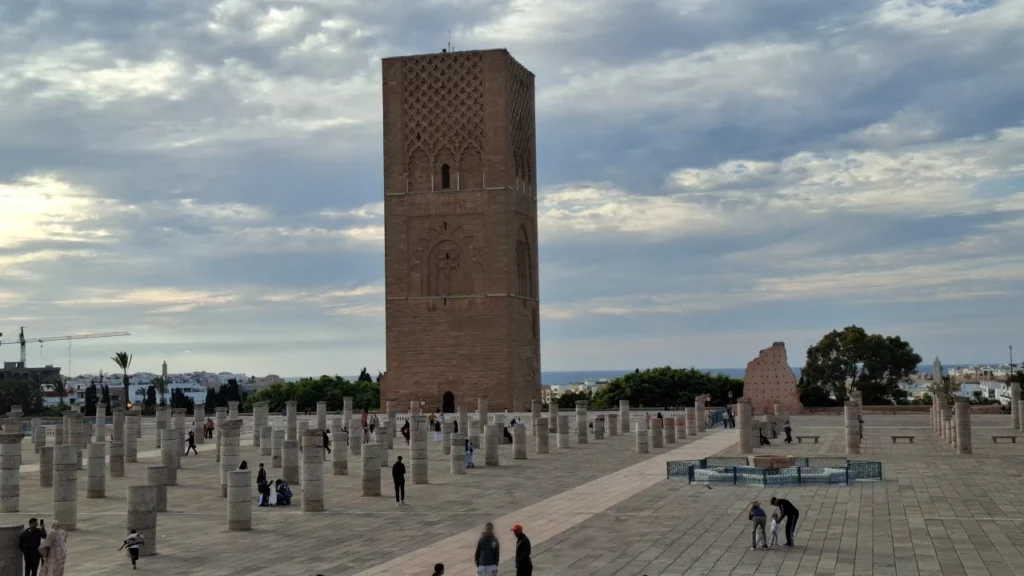
Hassan Tower — An unfinished 12th-century minaret that stands as one of Morocco’s most iconic monuments. The surrounding esplanade, with its rows of broken columns and the adjacent Mausoleum of Mohammed V, is one of the most atmospheric open spaces in Rabat.
Mausoleum of Mohammed V — The royal mausoleum housing the tombs of King Mohammed V and King Hassan II. The architecture is detailed, the space is peaceful, and entry is free.
Kasbah of the Oudayas — A fortified Kasbah at the mouth of the Bouregreg River, with blue and white painted streets, ocean views, and the Andalusian Garden inside. It is one of the most pleasant places in Rabat to walk slowly.
Chellah — Ancient Roman and medieval Islamic ruins on the southern edge of the city, surrounded by gardens and generally quiet even during busier periods. It is one of those places that genuinely surprises most visitors.
Ocean Views, Coastline and Gardens
One of the things that surprises visitors most about Rabat is how green and open the city feels.

Rabat has formal gardens, tree-lined promenades, and an Atlantic coastline that runs from the Bouregreg estuary southward. The area near the corniche and the route de Harhoura is calm and fresh in the mornings — ocean air, green spaces, open walking paths, and a sense of ease that is difficult to find in Morocco’s busier destinations.
This coastal and green identity is one of the things that makes Rabat feel genuinely different from other Moroccan cities.
Calm, Clean and Easy to Navigate
Rabat has a functioning tramway, a clear city center, walkable distances between many key sites, and a general sense of urban order that makes it one of the easier Moroccan cities to move around in.
For first-time visitors to Morocco in particular, Rabat can be a comfortable starting point. The medina is smaller and less intense than Fes or Marrakech. The streets are wider. The atmosphere is calmer. Most visitors find it easier to get their bearings here than in Morocco’s busier tourist cities.
A Modern Capital That Is Still Evolving
Rabat is not only administrative and historical. It is also a city that is changing, and that change is visible in its newer areas.
Neighborhoods like Agdal and Hay Riad show a cleaner, more residential and polished side of the capital. The Mahaj Riad area in Hay Riad reflects a more modern and organized urban rhythm. Newer developments around the Bouregreg waterfront, Le Carrousel, the Mohammed VI Tower area, and the Grand Théâtre area are further signs of a city that is evolving.
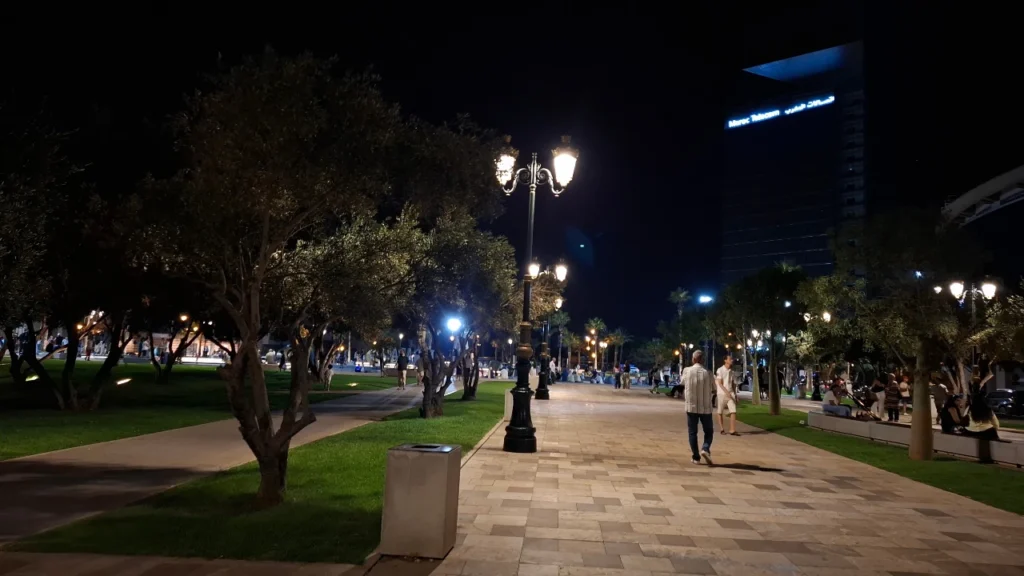
These places are not the main reason to visit Rabat on a first trip. But they help explain why the city feels more complete, more layered, and more interesting than many travelers expect. Rabat is not frozen in its administrative or historical image. It is moving forward, and that gives it a different kind of energy — quieter than other cities, but genuinely present.
A Practical Base for a Morocco Itinerary
Rabat sits on the main Atlantic rail line and is well connected by train to Casablanca, Marrakech, Tangier, Fes, and other cities. Casablanca is a short ride away, and Marrakech is reachable in a few hours depending on the service. Train times and schedules do change, so always check current departures before planning. You can view timetables and book tickets online through the official ONCF website at oncf-voyages.ma.
This rail connectivity makes Rabat a very practical base or stopover within a larger Morocco trip. Even if you only have one day in Rabat, it is worth adding to your itinerary. The main sites are close together, the city is manageable, and the experience gives you a genuinely different perspective on Morocco.
Best Things to Do If You Visit Rabat
Rabat has enough to fill one to three days comfortably. The main places to visit include:
- Hassan Tower — one of Morocco’s most iconic monuments, open and easy to visit
- Mausoleum of Mohammed V — a peaceful royal mausoleum with impressive architecture, free entry
- Kasbah of the Oudayas — blue and white streets, ocean views, and the Andalusian Garden
- Chellah — ancient Roman and Islamic ruins in a garden setting, rarely crowded
- Rabat Medina — calmer and smaller than Fes or Marrakech, easy to explore on foot
- Andalusian Garden — one of the most pleasant green spaces in the city
- Bou Regreg waterfront — a wide, open riverside area with views across to Salé
- Mohammed VI Museum of Modern and Contemporary Art — a well-presented cultural space in the city center
- Rabat coastline and corniche — especially pleasant in the morning for a walk with ocean air
- Royal Theatre of Rabat — a major modern cultural landmark near the Bouregreg area, worth seeing for its architecture and its role in Rabat’s performing arts scene
- Mohammed VI Tower area — the tower has become a new part of the Rabat-Salé skyline and reflects how the Bouregreg Valley is continuing to develop; interesting as a sign of contemporary Rabat rather than a tourist destination in itself
- Modern neighborhoods such as Agdal, Hay Riad — for a sense of the calmer, more residential and contemporary side of the city
For a full guide to every attraction, see our Best Things to Do in Rabat guide.
How Many Days Do You Need in Rabat?
One day — Enough to visit Hassan Tower, the Mausoleum of Mohammed V, the Kasbah of the Oudayas, and the Andalusian Garden. A focused but satisfying visit.
Two days — Adds Chellah, the Rabat Medina, the Bouregreg waterfront, and more time to walk the neighborhoods without rushing.
Three days — A comfortable, relaxed pace. Includes museums, gardens, the corniche, and the option of a short visit to Salé across the river.
Most first-time visitors find that two days gives a good balance between seeing the main sites and actually feeling the city’s rhythm.
For a full breakdown, see our How Many Days Do You Need in Rabat? guide.
How Does Rabat Compare to Marrakech?
This is one of the most common questions, and it deserves a direct answer.
Marrakech and Rabat are very different experiences. Neither is better than the other — they offer different things.
Marrakech has energy, the red city atmosphere, Jemaa el-Fnaa, the souks, and an intensity that is unlike anywhere else in Morocco. It is one of the most visited cities in Africa for a reason.
Rabat has calm, greenery, coastline, culture, cleanliness, and a slower rhythm. It has fewer tourists, a more local atmosphere, more open space, and landmarks that feel quieter and more accessible.
If you want energy, spectacle, and a classic Moroccan tourist experience — Marrakech is the stronger choice for that.
If you want a different side of Morocco — calmer, more elegant, easier to navigate at your own pace — Rabat adds something that Marrakech does not offer.
The better choice depends entirely on the traveler. Many visitors who spend time in both say that each city gave them something the other could not.
For a full comparison, see our Rabat vs Marrakech: Which City Should You Visit? guide.
Is Rabat Safe for Tourists?
Rabat generally feels calmer and more organized than many busier Moroccan destinations, but visitors should still use normal city awareness.
The city center, the main tourist areas, the medina, and the main neighborhoods are accessible and manageable for most travelers. That said, keep an eye on your belongings in crowded areas, stay aware of your surroundings at night in quieter streets, and apply the same common sense you would use in any unfamiliar city.
For families, solo female travelers, and first-time visitors, Rabat tends to feel more manageable and less overwhelming than some busier Moroccan cities — but no destination comes with a guarantee, and practical awareness always matters.
For more detail, see our full guide: Is Rabat Safe for Tourists?
Who Is Rabat Best For?
Families — Calm streets, gardens, open spaces, manageable distances, and organized transport make Rabat one of the more comfortable Moroccan cities to visit with children.
Solo female travelers — The calmer, more organized atmosphere makes Rabat a more manageable starting point than more intense destinations, though standard travel awareness always applies.
First-time visitors to Morocco — Rabat is a gentler introduction. Less overwhelming, easier to navigate, and still genuinely Moroccan.
Culture travelers — UNESCO heritage, multiple museums, a historic medina, ancient ruins, and significant architecture make Rabat one of Morocco’s most culturally interesting cities.
Couples — Waterfront walks, garden strolls, café culture, and elegant neighborhoods make Rabat a pleasant city for slower, more relaxed travel.
Digital nomads and slow travelers — The organized rhythm, growing café scene, and comfortable neighborhoods make Rabat a workable base for longer stays.
MREs and Moroccans abroad — Rabat is developing. There are new places, new cultural spaces, and a city that rewards rediscovery even for those who thought they already knew it well.
Who Might Prefer a Different City?
Rabat is not the right choice for every traveler, and honesty matters here.
If your main goal is nightlife, very busy markets, or a high-energy tourist atmosphere — Marrakech will serve you better.
If you want a beach and resort experience — Agadir is designed for that.
If you want the deepest possible immersion in ancient medina life — Fes offers something that Rabat cannot match in the same way.
If you want the scale and pace of a major metropolis — Casablanca is the right choice.
Rabat is for travelers who want a calm, elegant, cultural, and easy-to-visit capital. If that is not what you are looking for, another Moroccan city will suit you better — and that is a completely honest answer.
Local Tip from Oussama ben
One thing most visitors miss about Rabat is how the city feels in the early morning, especially near the corniche along the route de Harhoura. The ocean air, the green spaces, the quiet streets before the day gets busy — that is when Rabat’s real character comes through. Many people arrive expecting a city of government buildings and leave genuinely surprised by the greenery, the fresh air, and the calm. Give yourself at least one early morning walk outside the main tourist sites, and you will understand Rabat in a way that the landmarks alone cannot show you.
A Simple One-Day Plan If You Visit Rabat
If you only have one day and want to understand the city quickly, this is a simple starting point:
Morning — Start at Hassan Tower and the Mausoleum of Mohammed V. Arrive early for the calm atmosphere and open esplanade before crowds arrive.
Late morning — Walk or take the tram to the Kasbah of the Oudayas. Move slowly through the streets, stop at the Andalusian Garden, and look out over the Atlantic from the ramparts.
Afternoon — Walk through the Rabat Medina. Smaller and calmer than Fes or Marrakech, it is comfortable for a relaxed stroll and a mint tea break.
Late afternoon — Walk along the Bouregreg waterfront. The river views and the open space here are one of the most pleasant ways to end a day in Rabat.
For a full hour-by-hour plan with transport and timing, see our One Day in Rabat: Practical Itinerary.
For more on what to see, visit our Best Things to Do in Rabat guide. To plan your accommodation, see Where to Stay in Rabat for First-Time Visitors. For transport and getting around, see How to Get Around Rabat. And if you are comparing options, our Rabat vs Marrakech: Which City Should You Visit? guide covers both cities side by side.
Practical Information for Visiting Rabat
| Topic | Details |
|---|---|
| Getting there by train | Rabat is well connected by train to Casablanca, Marrakech, Tangier, Fes, and other cities. Check timetables and book tickets at oncf-voyages.ma. Booking ahead is recommended during peak periods. |
| Train stations | Rabat has three stations: Rabat Ville (most central, closest to the main sites), Rabat Agdal (Agdal neighborhood), and Rabat Riad (south of the city). Most visitors arrive at Rabat Ville. See our Rabat Train Stations Guide. |
| Getting around | Rabat has a tramway connecting many key areas, metered taxis, and several neighborhoods that are easy to explore on foot. See our How to Get Around Rabat guide. |
| Currency | Moroccan Dirham (MAD). Cards are accepted in many hotels, restaurants, and larger shops. Carry cash for smaller purchases, medina stalls, and taxis. |
| Language | Arabic and Darija (Moroccan Arabic). French is widely understood in tourist areas. English is less common but growing in newer neighborhoods. |
| Best time to visit | Rabat is pleasant year-round. Spring (March–May) and autumn (September–November) are the most comfortable seasons. Summers are warm with Atlantic breezes. Winters are mild. |
| Visa | Many nationalities do not need a visa for short stays in Morocco. Requirements vary — always check for your nationality before traveling. |
FAQ
About The Author