

Rabat is one of the few Moroccan cities that works well for almost any time of year. Its position on the Atlantic coast gives it a softer, more moderate climate than inland cities like Marrakech or Fes — which means the seasonal differences here are real, but rarely extreme.
That said, timing does matter. Not because Rabat becomes difficult in any particular month, but because different seasons suit different kinds of travelers. A family with young children, a solo female traveler, a couple looking for a quiet weekend, a culture visitor drawn to monuments and museums — each of them will find their best Rabat at a slightly different time of year.
This guide covers both. First the seasons, then the traveler types, so you can find your answer quickly and plan with confidence. If you are still deciding whether to include Rabat in your Morocco itinerary at all, our Rabat Travel Guide covers everything you need from the beginning.
The Quick Answer
The best time to visit Rabat is spring (April and May) and early autumn (September and October). These months combine comfortable temperatures, low rainfall, calm streets, and the city’s gardens and outdoor spaces at their most pleasant. For most international travelers, spring is the strongest choice overall.
Summer works well if you want the beach or prefer a lively city atmosphere. Winter is mild enough to visit comfortably and offers the quietest, most affordable experience. Rabat does not have a true bad season — but each season suits a different kind of trip. If you are still weighing whether the city deserves a place in your itinerary, our honest local guide to visiting Rabat can help you decide first.
Key Takeaways
- Spring (April–May) and early autumn (September–October) are the best overall windows for most visitors
- Summer (June–August) is warm, dry, and active — good for beach visitors, but busier with domestic tourism
- Winter (December–February) is mild, quiet, and the most budget-friendly season
- Rabat’s Atlantic location keeps temperatures softer than inland Moroccan cities year-round
- The section below maps each season to a specific traveler type — families, solo female travelers, couples, culture visitors, and more
Why Rabat’s Climate Feels Different from Other Moroccan Cities
Rabat sits on the Atlantic coast, at the mouth of the Bouregreg River. That position matters for travelers more than most city guides acknowledge.
The Atlantic Ocean acts as a natural temperature regulator. In summer, a steady ocean breeze keeps Rabat noticeably cooler than cities further inland. While Marrakech can reach 38–40°C in July and August, Rabat’s average high in those same months stays around 28°C / 82°F. The air near the coast feels lighter and more breathable, even on the warmest days. In winter, the ocean prevents the nights from getting truly cold — January averages a high of 17°C / 63°F, which is mild by almost any standard.
Rabat’s climate is classified as Mediterranean with Atlantic influence (Köppen: Csa). The city receives approximately 3,000 hours of sunshine per year. Rain is concentrated mainly between November and March, while July and August are usually the driest months. Annual average temperature sits at approximately 18°C / 64.6°F. For a full monthly breakdown, see our dedicated Rabat weather by month guide.
The practical result for travelers: Rabat is genuinely comfortable for a wider stretch of the year than most people expect when they think of Morocco.
Spring in Rabat: March to May
Spring is when Rabat shows its best version of itself.
Temperatures settle in a range of 18–23°C / 65–74°F during the day, with cooler evenings that still feel pleasant for walking. The city’s green spaces come fully alive — the Andalusian Gardens inside the Kasbah of the Oudayas fill with colour, the public gardens along Avenue Mohammed V are at their most vivid, and the light on the Bouregreg River has a warmth that feels different from any other time of year.
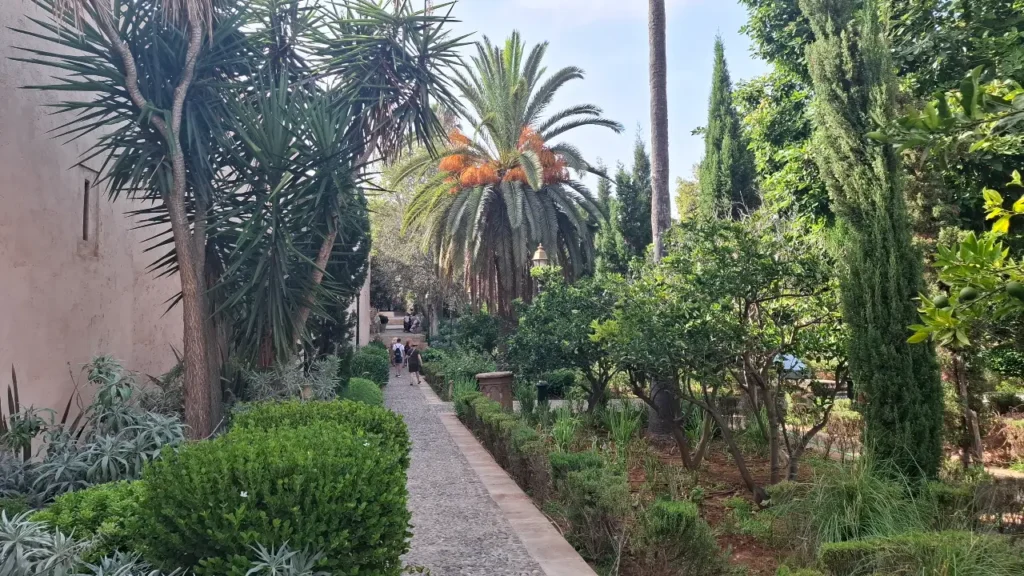
The streets stay calm. International visitor numbers are moderate, and the domestic summer crowd has not yet arrived. This means you can walk through the Medina, visit Hassan Tower, explore Chellah, or sit at a café on the Bouregreg Marina without navigating crowds. Monuments feel accessible and unhurried in a way that changes significantly once summer begins.
April is the strongest single month. Rainfall is low, temperatures are ideal for walking long stretches of the city on foot, and the gardens are at their peak. May is equally good and slightly warmer, with even less rain. March can still bring some cooler days and occasional showers, but the city is already beginning to open up after winter.
For most travelers visiting Rabat as part of a Morocco itinerary, spring is the safest and most rewarding choice.
Summer in Rabat: June to August
Summer in Rabat is warm, dry, and more energetic than the rest of the year — but it is not the exhausting heat that some visitors associate with Morocco.
The Atlantic breeze keeps the city at a human scale even in July and August. Temperatures average 24–28°C / 75–82°F during the day. The sky is almost always clear, sunshine hours peak at around ten to eleven hours per day, and the coast becomes the center of the city’s life. Rabat Plage draws large numbers of Moroccan families and young people who come from across the country for the summer. The beach is lively, the evenings are long, and the city feels at its most social.
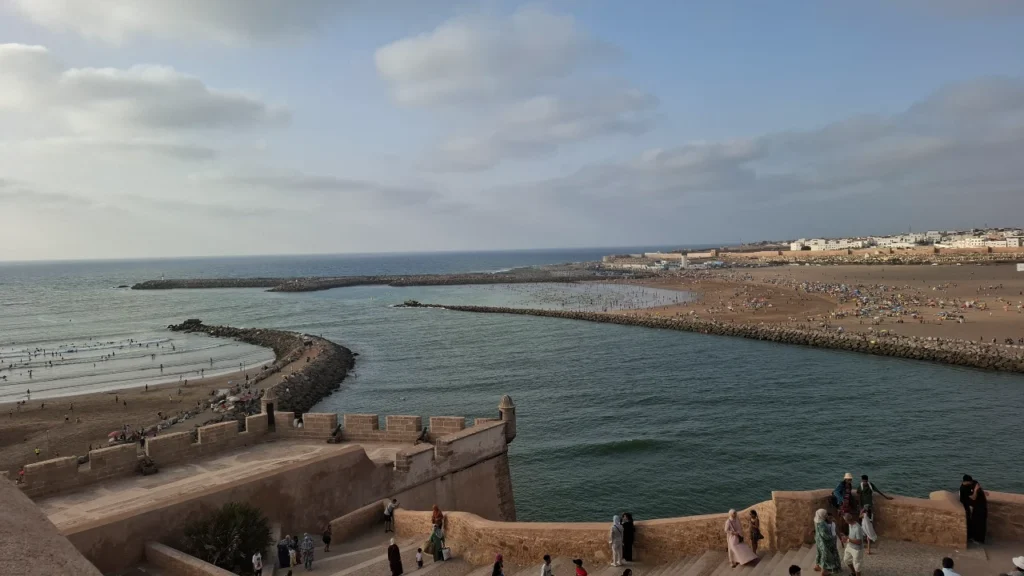
The jetty separates the Atlantic from the Bouregreg — and the two
cities from each other.
The honest note for international visitors: summer is peak domestic tourism season. Hotels fill faster, the beach is busy, and the relaxed calm that characterizes Rabat for most of the year becomes a little less pronounced. It is still a comfortable city — just a more active version of itself.
June can also feel livelier when Mawazine takes place. If your dates overlap with the festival, book accommodation earlier and expect some areas of Rabat to feel busier than usual. Check current dates before planning, as the festival calendar can shift. If you need help choosing where to stay during this period, our guide on where to stay in Rabat breaks down the best areas by traveler type.
For travelers who want warmth, a beach, and a lively atmosphere, summer delivers. For those who prefer Rabat’s quieter character, the shoulder seasons are a better fit.
Autumn in Rabat: September to November
Early autumn is the second-best window of the year, and for some travelers it is actually the first.
September is exceptional. The summer crowds have thinned — Moroccan families return to school and work after August — but the warmth remains. Temperatures sit around 22–25°C / 72–77°F, the sea is at its warmest of the year, and the city settles back into the calm rhythm that makes it easy to explore. Monuments, gardens, cafés — everything feels accessible again.
October stays warm and pleasant, with temperatures beginning to ease toward 20–22°C. The light changes slightly, becoming softer and more amber in the afternoons. It is a particularly good month for photography around Hassan Tower, the Kasbah of the Oudayas, and along the Bouregreg waterfront. The Théâtre Royal de Rabat and the Musée Mohammed VI d’Art Moderne et Contemporain tend to have fuller cultural programmes in this period, which suits visitors interested in Rabat’s contemporary cultural life.
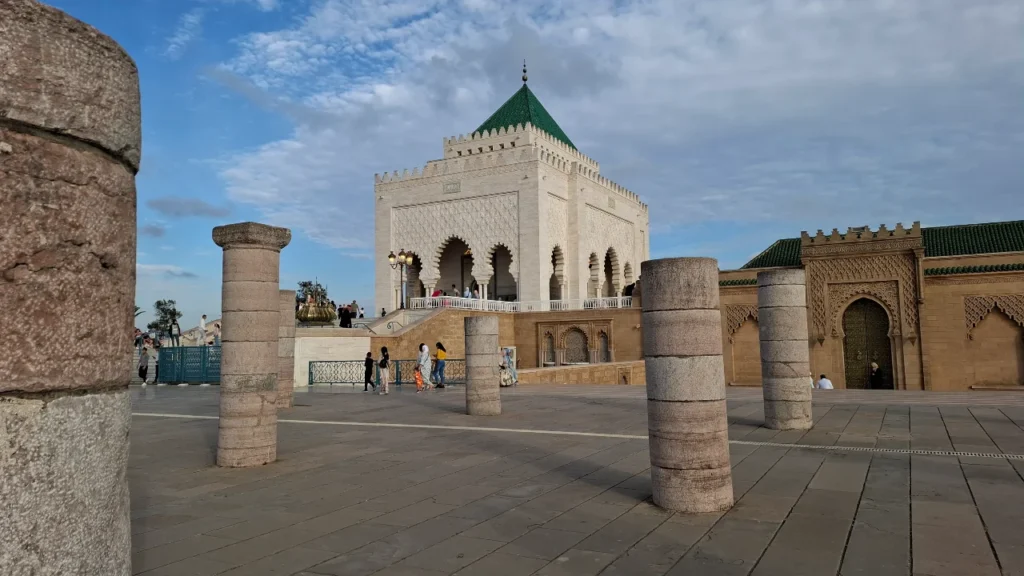
the Mausoleum of Mohammed V — one of the most quietly impressive
views in Rabat, and less crowded than most people expect.
November marks the return of rain. Showers become more frequent, and the city starts to feel like a winter destination rather than an autumn one. It is still perfectly possible to visit — museums and indoor spaces remain open and welcoming — but outdoor exploration requires more flexibility.
Winter in Rabat: December to February
Winter in Rabat is mild by most standards, and it offers something the other seasons do not: the city almost entirely to yourself.
Daytime temperatures range from 12–18°C / 54–65°F. It is cool enough to want a jacket in the evenings, and rain arrives with more regularity than in summer — concentrated especially in December and January. But the Atlantic moderates everything. Truly cold days are rare. Snow is virtually unheard of at this elevation and latitude. On clear days, which are common even in winter, the light is crisp and the views across the Bouregreg toward Salé feel particularly open.
One practical note on the coastal feel: the Atlantic humidity means the air in winter can feel crisper and damper than the official temperature suggests. A 14°C day in Rabat can feel noticeably cooler than the same temperature in a drier inland city. Traditional thick-walled medina riads in particular can feel chilly or damp at night if they do not have central heating — which not all of them do. If you are staying in a riad in winter, pack warm layers and comfortable warm sleepwear. It is a small thing, but it makes the difference between a genuinely comfortable stay and a surprising one.
The practical advantages are real. Hotel prices drop noticeably. Flights tend to be cheaper. Monuments, museums, and cultural sites have their lowest visitor numbers, which means you can visit Hassan Tower, Chellah, or the Mausoleum of Mohammed V without any sense of rush. Cafés in Agdal and Hay Riad remain active — this is a working city, not a seasonal resort, and daily life continues at its normal pace.
One calendar factor worth knowing for winter travel: Ramadan follows the Islamic lunar calendar and shifts roughly 10 days earlier each year. Through the late 2020s, it falls progressively deeper into winter, moving from February into January as the decade progresses. During Ramadan, Rabat’s daytime rhythm can feel quieter, while evenings become livelier after sunset as locals gather for the fast-breaking meal. It is a different rhythm, not a difficult one. Check the expected dates for your specific travel year before booking.
For the right traveler, winter in Rabat is genuinely rewarding. It requires a little more flexibility with weather, but it offers a more honest and unhurried version of the city.
Best Time to Visit Rabat by Traveler Type
For Families
Best season: Spring — April and May
Spring gives families the most comfortable conditions for exploring Rabat with children. Temperatures are warm without being hot, which makes long walks through the Medina, visits to Chellah, or afternoons at the Andalusian Gardens manageable without the exhaustion that summer heat can bring. The beach is accessible but not yet crowded with the summer domestic crowd, which keeps the atmosphere calmer and easier to navigate with kids.
The Bouregreg Marina area offers open space and easy movement, and the tramway makes getting between neighborhoods simple without needing taxis — our guide on how to get around Rabat covers routes, fares, and the easiest ways to move through the city. April and May in particular give families the best combination of good weather, open attractions, and a relaxed city pace.
Practical note: if your family can travel outside the main July–August holiday period, April and May usually give Rabat a calmer and more comfortable rhythm with children.
For Solo Female Travelers
Best season: Spring (April–May) and early autumn (September–October)
Rabat can feel calmer and easier to navigate than many busier Moroccan destinations, especially for solo female travelers who prefer organized streets, modern neighborhoods, tramway access, and a slower city rhythm. It is still a real city, so normal awareness matters — particularly at night or in unfamiliar areas. For a more detailed look at what to expect, our guide on safety in Rabat covers neighborhoods, transport, and practical tips for solo visitors.
Spring and early autumn offer the best conditions for solo exploration on foot. Days are long, temperatures are comfortable for walking extended distances, and the city’s terraces and cafés — particularly in Agdal and Hay Riad — are regularly occupied by women working, meeting friends, or simply sitting alone without attracting attention. The Kasbah of the Oudayas, the Medina, and the riverfront are all pleasant to explore independently during these seasons.
Summer works too, but the domestic crowd changes the feel of the beach and some outdoor spaces. Winter is quieter and can still work well, though shorter days require a little more planning around daylight.
For First-Time Visitors
Best season: Spring (April–May) or September
If this is your first time in Rabat — or your first time in Morocco — spring gives you the clearest, most pleasant introduction to the city. The weather removes any planning uncertainty, the monuments are easy to access, and the calm pace of Rabat’s streets in April or May gives you space to understand what the city actually is, rather than arriving in the middle of a crowded summer or a grey January.
September is an equally strong choice for first-timers who cannot travel in spring. The city returns to its quieter self after August, temperatures remain warm, and the cultural sites are easy to explore without heat or crowds to manage.
For a practical overview of what to see and how to organize your time, our guide to the best things to do in Rabat is a good companion to this article. Even a one day in Rabat itinerary is genuinely satisfying when the timing is right.
For Couples
Best season: Spring (April–May) and autumn (September–October)
Rabat’s character — calm, coastal, elegant, and unhurried — makes it a natural choice for couples who want a city break without the pressure of intense tourism.
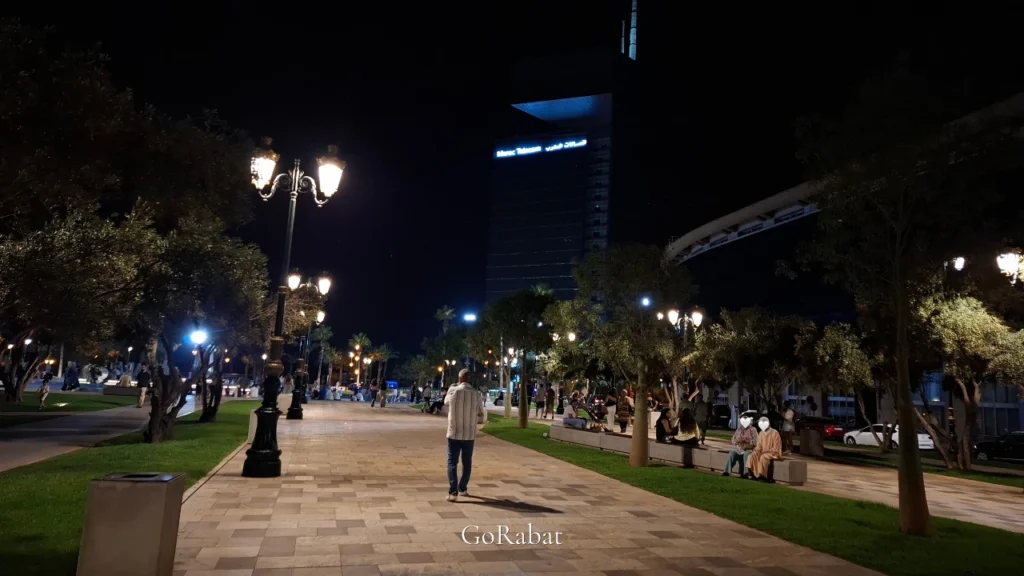
Spring is the most romantic season in a straightforward way: the Andalusian Gardens are in bloom, the light on the Bouregreg in the late afternoon is golden and warm, and the city invites slow movement rather than rushed sightseeing. Evenings on the Marina or at a café near the Kasbah feel easy and genuinely pleasant. The Mohammed VI Tower, visible across the skyline, gives the city a quietly modern edge that sits well alongside its historic medina and ancient ruins.
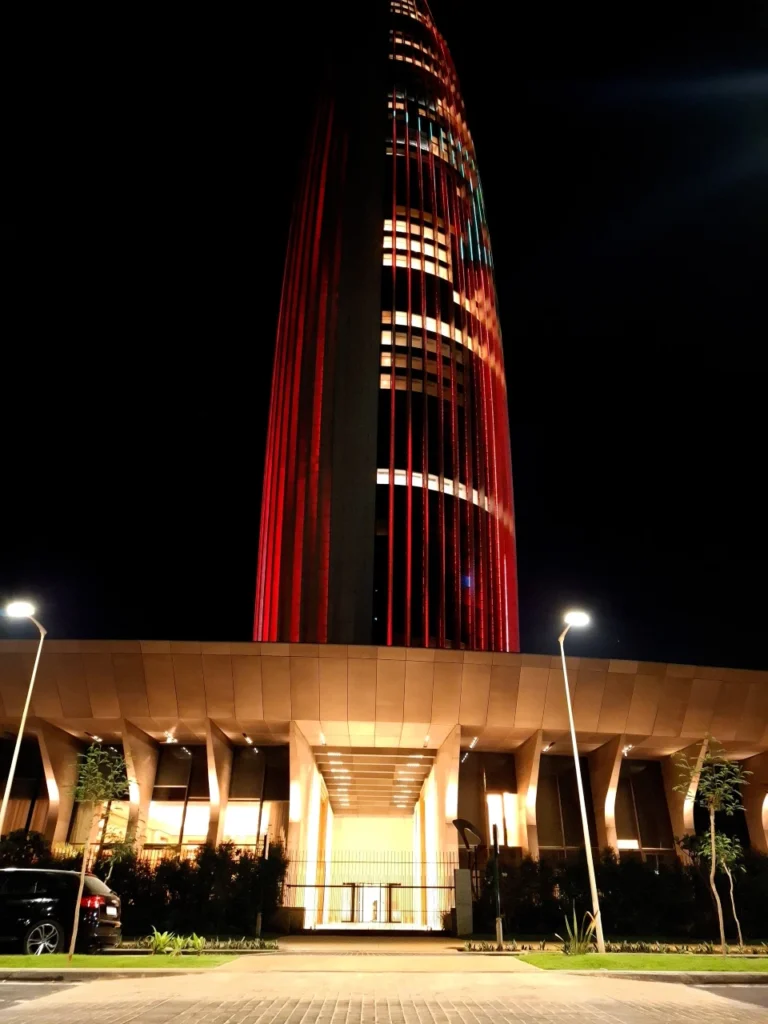
in Africa, and one of Rabat-Salé most striking landmarks
after dark.
Early autumn offers a similar calm with slightly warmer evenings and a more golden quality to the light. October in particular is one of Rabat’s most visually beautiful months.
For Beach Visitors
Best season: Summer — July and August
If the beach is your primary reason for visiting Rabat, summer is your season. Rabat Plage along the Atlantic coast is at its most active in July and August — warm water, clear skies, and a long stretch of coast that draws Moroccan families and visitors from across the region. The water temperature reaches its peak in August at around 23°C / 74°F.
The honest picture: this is also when the beach is most crowded, when hotels are fuller, and when the city feels furthest from its usual calm. But the Atlantic breeze prevents the heat from becoming oppressive, and the coastal atmosphere has an energy that other Moroccan beach destinations — further inland or further south — do not quite replicate.
For visitors who want beach time combined with some city exploration, arriving in late June or early September gives you warmer conditions than spring or autumn, without the full peak-season crowd of July and August.
For Culture Travelers
Best season: Spring (March–May) and winter (December–February)
Rabat is a UNESCO World Heritage city, recognized for the combination of its historic monuments and its modern urban character. For travelers primarily interested in this cultural dimension — Hassan Tower, the Mausoleum of Mohammed V, Chellah, the Kasbah of the Oudayas, the Musée Mohammed VI d’Art Moderne et Contemporain, and the architectural ambition visible in places like the Théâtre Royal de Rabat (often referred to in English as the Royal Theatre of Rabat) — both spring and winter offer the most focused and unhurried experience.
It is worth noting that Rabat has been named UNESCO World Book Capital 2026, which may make the city especially interesting for travelers who enjoy books, cultural programming, and public events. Check the current calendar before your visit, as specific events can change throughout the year.
Spring gives you good light and comfortable walking temperatures for outdoor sites. Winter gives you the same sites with almost no other visitors, which changes the experience at places like Chellah in particular — a site that rewards slow, quiet exploration in a way that is harder to achieve in a busier season.
The Medina, smaller and calmer than those of Marrakech or Fes, is easy to explore in any season, but it too feels most genuine in the quieter months when the pace is local rather than touristic.
For Digital Nomads
Best season: Autumn (September–October) and winter
For travelers planning a longer stay in Rabat to work remotely, autumn and winter offer the most practical conditions. The city after summer is calm, hotels and apartments are priced more reasonably for longer commitments, and the café culture in Agdal and Hay Riad — where women and men work regularly on laptops — has a settled, functional rhythm rather than a seasonal one.
Rabat is also easy to reach by train from Casablanca. According to ONCF Voyage, the journey from Casa Voyageurs to Rabat Agdal takes around 51 minutes, which makes the capital practical for longer stays and remote workers who want access to Casablanca without basing themselves there. If you arrive through Casablanca Mohammed V Airport, check current ONCF schedules before planning your transfer, as airport journeys may require an additional connection through the city. Our Casablanca to Rabat guide covers the route in full detail.
Rabat’s modern neighborhoods, reliable tramway, and organized urban character make it a naturally comfortable base for slow work. The absence of the summer crowd means that finding a consistent café, establishing a daily routine, and moving through the city without navigating peak tourism is straightforward.
Winter adds some rain to manage, but the Mediterranean mildness keeps the outdoor life — parks, terraces, walks along the Bouregreg — possible on most days. The Mohammed VI Tower area and the newer districts around Hay Riad give the city a contemporary feel that works well for the lifestyle digital nomads tend to want from a base.
For Budget Travelers
Best season: Winter (December–February, excluding Christmas week)
Winter is Rabat’s most affordable season without meaningful sacrifice in experience. Hotel rates drop, flights from Europe are cheaper, and the city’s monuments, cafés, and streets are accessible and functioning normally — this is not a resort city that shuts down in the low season.
The weather requires some adjustment: expect occasional rain, cooler evenings, and shorter days. But Rabat in winter is still mild compared to almost any European or North American winter. A light waterproof layer and an afternoon in a warm café watching the rain over the Medina rooftops is its own kind of travel experience.
The one week to avoid for budget travelers is Christmas and New Year, when short-break demand from Europe briefly pushes prices up. January and February, by contrast, are among the quietest and most affordable weeks of the year to visit Morocco’s capital.
Rabat Month by Month: Practical Compass
| Month | Avg High | Rain Level | Crowds | Best For |
|---|---|---|---|---|
| January | 17°C / 63°F | Moderate | Very low | Budget travelers, quiet culture visits |
| February | 18°C / 64°F | Moderate | Very low | Budget travel, slow exploration |
| March | 19°C / 67°F | Some rain | Low | Early spring visits, gardens starting to bloom |
| April | 22°C / 72°F | Low | Medium | Best overall month — families, first-timers, couples |
| May | 23°C / 74°F | Very low | Medium | Spring at its warmest — all traveler types |
| June | 25°C / 77°F | Minimal | High | Beach visitors, summer atmosphere |
| July | 27°C / 81°F | Near zero | Very high | Beach, domestic peak season |
| August | 28°C / 82°F | Near zero | Peak | Beach, warmest water, busiest month |
| September | 25°C / 77°F | Very low | Medium | Strong second choice — solo travelers, first-timers, couples |
| October | 22°C / 72°F | Some rain | Low–medium | Culture, photography, digital nomads |
| November | 19°C / 67°F | Wettest month | Low | Culture visits, quiet exploration |
| December | 17°C / 63°F | Moderate | Low | Budget travel, quiet city feel |
What to Pack for Rabat by Season
| Season | What to pack |
|---|---|
| Spring | Light jacket, comfortable walking shoes, sunglasses |
| Summer | Light clothes, sunscreen, hat, beach layer |
| Autumn | Comfortable shoes, light jacket, simple layers |
| Winter | Jacket, umbrella or rain layer, warm evening layer |
Local Tip from Oussama
I think spring in Rabat has a quality that is easy to miss if you visit at another time. It is not just the temperature or the flowers in the Andalusian Gardens — it is the light. In April especially, the morning light on the river, on the walls of the Kasbah, and on the white facades along the Hassan district has a softness that makes the city feel particularly easy to be in. If you can be flexible about your dates, arrive in the first two weeks of April. Walk slowly. That is when Rabat makes the most sense.
Frequently Asked Questions
The best time to visit Rabat is spring, particularly April and May, when temperatures are comfortable for walking and exploring, rainfall is low, and the city’s gardens and outdoor spaces are at their best. Early autumn — September and October — is an equally strong window, with warm conditions and fewer crowds than summer.
April is widely considered the best single month to visit Rabat. Daytime temperatures average around 22°C / 72°F, rain is minimal, and the gardens and outdoor monuments are at their most pleasant. May is a close second with slightly warmer and drier conditions.
Yes. Spring is Rabat’s strongest season for most traveler types. The Andalusian Gardens bloom, the Bouregreg riverfront is at its most pleasant, and the city maintains its calm, unhurried character before summer’s domestic tourism arrives. Families, first-time visitors, couples, solo female travelers, and culture travelers all find spring the most comfortable and rewarding window.
Rabat is warm in summer — July and August average around 27–28°C / 81–82°F — but it is noticeably cooler than Morocco’s inland cities. The Atlantic Ocean provides a consistent coastal breeze that keeps the heat manageable. Summer is the best season for the beach and the most active time of year, but the domestic crowd is at its peak and the city feels busier than usual.
Yes. Winter is a good time to visit Rabat if you prefer a quieter cultural trip and lower travel costs. The weather is mild compared with many European or North American cities, but you should expect cooler evenings and more chance of rain.
Spring, especially April and May, is usually the best time for families visiting Rabat. The weather is warm without being too hot, the gardens are pleasant, and the city feels easier to explore with children than during the July–August peak season.
Hi, I’m oussamaben.
the founder of GoRabat.
I created GoRabat with a simple goal: to make Rabat easier to discover for every visitor.
About The Author